You have an addition, a garage conversion, a back unit or rewired rooms that are already built and lived in, and now a code enforcement notice, a buyer's inspection or your own records have shown there is no permit behind the work. The question in front of you is practical: whether this work can be brought onto the record, what the building department will want to see, and how that path compares with removing the work or selling the property in its present condition.
Work that has already been built without a permit can often be legalized through an after-the-fact permit from the city or county building department where the property sits. The owner applies, submits plans showing the work as it exists, passes plan review and inspections, and corrects anything that falls short of code. Walls may need to be opened. Fees are set locally, and approval is not assured.
On this page
Key Takeaways
An after-the-fact permit, sometimes called a retroactive permit, is a building permit applied for after construction is finished rather than before work begins. It is the usual route for legalizing unpermitted work.
- Who issues it. In California, the local building department of the city or county where the property is located issues building permits. A state agency does not.
- Which standards apply. The California Building Standards Code (Title 24 of the California Code of Regulations) sets minimum statewide standards, and local jurisdictions administer and enforce them, often with local amendments.
- What brings owners here. Two triggers are common: a code enforcement notice or citation, and discovery of the work during a sale or a refinance.
- What it requires. Documents describing the work, a plan review, inspections that can include opening finished surfaces, and correction of anything that does not meet code before final sign-off.
When This Option Fits
Legalization is commonly sought for room additions, garage conversions, accessory dwelling units, room conversions, and electrical, plumbing or structural changes. The broader picture of unpermitted construction options includes these and other kinds of work.
The path tends to be more straightforward when:
- The work was built to code or close to it. Fewer corrections mean fewer return trips by the inspector.
- Framing and systems can be reached. Accessible attic, crawlspace or wall areas let an inspector see concealed work with less demolition.
- The building department is responsive. A department that explains its submittal requirements early makes the sequence more predictable.
It becomes harder, and may not be possible, when the work cannot meet current code, when a setback or zoning problem cannot be resolved, or when the work has been demolished or altered since it was built so that the record no longer matches what stands.
A permit also does not settle everything on its own. Zoning violations, HOA restrictions, title issues and disputes with co-owners or a contractor are separate matters handled by an attorney or the relevant authority. Where any of these is contested, that is a different subject. An after-the-fact permit is one option among several, not the answer for every property.
How It Works, Step by Step
The sequence below is general. What one city requires, another may handle differently, so the local building department's own requirements govern.
- Contact the building department. Owners usually start by asking whether the jurisdiction runs a formal after-the-fact or legalization program or processes these through its standard permit application.
- Submit the application and documents. The submittal describes the work as it exists today, usually through plans, drawings or as-built documentation, meaning drawings of what was actually built.
- Plan check. Plan check is the department's review of the submitted documents against the applicable code. Reviewers may return corrections or ask for more information before the plans are approved.
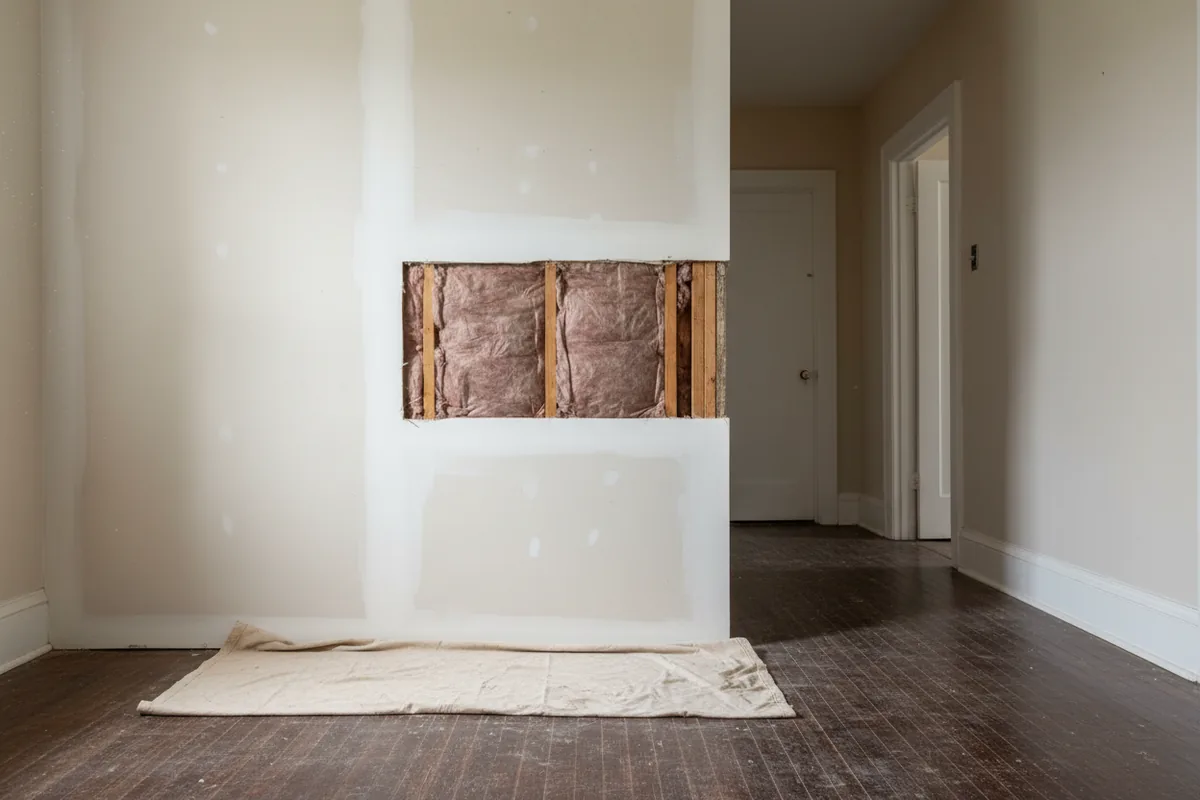
- Inspection. An inspector visits to check the work against the approved plans. Because framing, wiring and plumbing are usually hidden behind finished surfaces, the inspector may require walls, ceilings or floors to be opened so concealed work can be seen.
- Corrections. Work that does not meet code has to be brought into compliance before the permit can be finaled. Some corrections are small. Others mean rebuilding part of the work.
- Final sign-off. Once every required inspection passes, the department finals the permit and the work is recorded as permitted.
On a code enforcement case, the department's notice may also set its own conditions for closing the violation. Some owners use a permit expediter for this kind of work, and working with a permit expediter on a code case is one way to handle the paperwork.
Costs, Timing and Trade-offs
Each local jurisdiction sets its own permit fees, and the local building department publishes its current fee schedule. That schedule is where the real numbers for a given property come from.
Many local fee schedules also add a surcharge or penalty to after-the-fact permits because the work began without prior approval. Whether one applies and how it is calculated depends on the jurisdiction.
Other costs can follow from the process itself:
- As-built plans. A drafter or architect may be hired to prepare drawings of the existing work.
- Opening and correcting. A contractor may be needed to open finished surfaces for inspection, make corrections and patch afterward.
- Re-inspections. Some departments charge again when work fails an inspection and the inspector has to return.
Timing turns on the department's workload, how complex the work is, and whether corrections are needed. Each of these varies from case to case, so no range holds for every property. A page on what it costs to fix code violations breaks these cost drivers down further.
The central trade-off is this. Legalization can resolve the violation and put the work on the record, but it takes time and money, and it can mean opening walls in a home where people live. The other paths carry different costs, described next.
Options to Compare
Each path below solves a different part of the problem. Each also leaves something unresolved.
| Option | What it does | What it asks of the owner |
|---|---|---|
| After-the-fact permit | Legalizes the work if it can meet current code | Fees, any local surcharge, documents, inspections, corrections |
| Correct or remove the work | Undoes the work so the violation no longer exists | Demolition or restoration, often under a permit of its own |
| Sell in present condition | Transfers the property with the work as it stands | Full disclosure, and a price that reflects the unresolved work |
| List with a real estate agent | Markets the property openly with the work disclosed | Preparation and showings, and possible lender or buyer demands for resolution before closing |
Removing the work may be required where legalization is not feasible.
Selling in present condition does not end the seller's duties. Civil Code section 1102 applies the disclosure article, except as Civil Code section 1102.2 provides, to transfers of single-family residential property by sale, exchange, real property sales contract, lease with an option to purchase, any other option to purchase, or ground lease coupled with improvements. Under Civil Code section 1102(c), any waiver of those requirements is void as against public policy. Those duties do not change because a buyer pays cash or accepts the property as it is. Civil Code section 1102.2 does exempt certain transfers based on who the buyer is or how the transfer happens, including sales between co-owners, transfers to a spouse or to a person in the line of consanguinity (blood relationship) of a transferor, transfers to or from a governmental entity, and court-ordered sales.
Where an owner considers a direct sale to a buyer who pays cash and takes the property as it is, that buyer's offer is often lower than an open-market price. The reason is that the buyer takes on the corrections, the risk of what the inspector finds, and the cost of reselling. In exchange, the seller gets less preparation, fewer showings and less dependence on a buyer's loan.
Listing with an agent reaches more buyers, but a buyer's lender may require the work to be resolved before closing.
Comparing written offers and estimated net proceeds is how an owner tells which path fits. Net proceeds means the price less commissions, repairs, carrying costs, loan payoffs and closing costs.
What to Have Ready
A building department, a contractor or a prospective buyer will ask for many of the same items. Gathering them early helps with any of the paths above.
- Assessor's parcel number and address. The APN is the county's identifying number for the parcel.
- Existing permits on file. The building department, and sometimes the county assessor's office, can often provide the property's permit history.
- Records of the work. Contractor invoices, photos and construction dates are useful, if known.
- Any notice, citation or red-tag order. Note the violation number and the department that issued it. A red-tagged house raises occupancy questions of its own.
- Survey or site plan. Include one if available. Setbacks often turn on it.
Some departments require as-built drawings prepared by an architect or drafter, and the department's own submittal list says what it accepts. As a next step, many owners start by pulling the property's permit history from the local building department or the county assessor's records, since it shows what is already on file before any other decision is made.
Local Context
California has hundreds of local building departments. Each city runs one for property inside its limits, and each county runs one for unincorporated areas, so requirements differ from place to place. Placer County, Nevada County and the City of San Leandro are examples of jurisdictions that publish their own building department requirements. Their rules describe their own territory only and say nothing about any other city or county.
Some jurisdictions offer formal legalization or amnesty programs with defined procedures. Others route after-the-fact applications through their standard permit workflow. Title 24 sets the statewide floor, and local amendments are common, so the local building official can say which code edition and amendments apply to a given property.
The Contractors State License Board is the state agency that licenses contractors, and owners can use it to check a contractor's license status. It does not issue building permits. For local requirements, fees and processing times, the owner's own city or county building department is the source that governs. Background on how building code violations are enforced can help in reading a notice.
Ready to talk through your options?
Share the details of your notice. You choose whether contractors or a sale consultant may contact you.
Get help with my propertyFrequently asked questions
Who issues building permits in California?
The local building department of the city or county where the property sits issues them, not a state agency. The California Building Standards Code sets minimum statewide standards, and each jurisdiction runs its own permit program.
What happens if you don't pull a permit to build a garage?
The garage becomes unpermitted work. The building department can require an after-the-fact permit, corrections to bring it into compliance, or removal, and a code enforcement notice or citation may follow once the work is discovered. Penalties depend on the local jurisdiction.
How much does a retroactive permit cost?
It depends on the jurisdiction, because each one sets its own fees and many add an after-the-fact surcharge. As-built drawings and corrections add to the total. The local building department's published fee schedule gives the current figures.
Can unpermitted work be sold as-is in California?
Yes. A property can be sold in its present condition, but disclosure duties still apply as described under Options to Compare. A waiver of those duties is void under Civil Code section 1102(c), and Civil Code section 1102.2 exempts only certain transfers, such as transfers between co-owners or to a spouse.
Does an after-the-fact permit require opening walls?
It may. An inspector has to see concealed framing, wiring and plumbing, so walls, ceilings or floors can be opened when that work is hidden. Whether opening is needed depends on the type of work and what the inspector finds.
What is the difference between an after-the-fact permit and a regular building permit?
The timing is the difference. A regular permit comes before construction, so inspections happen at each stage. An after-the-fact permit comes after the work is complete, so the department may ask for more documentation or physical access to check what was built.
What happens if the unpermitted work cannot meet current code?
The department may deny the permit. The owner can then modify the work until it complies, remove it, or in some circumstances seek a variance or other relief through local planning or zoning. A zoning or land use matter is handled by an attorney or the relevant local authority.