If you are a landlord holding a notice like this, you may be dealing with two problems at once: a unit with a tenant living in it, and a government office asking for repairs by a date it has set. The notice may have come after a tenant called the city, or after a scheduled rental inspection. Either way, the questions tend to be the same. What does this paper require, who has to act, what happens to the rent and the tenancy, and what are the choices if the repairs turn out bigger than expected? The sections below take those questions one at a time.
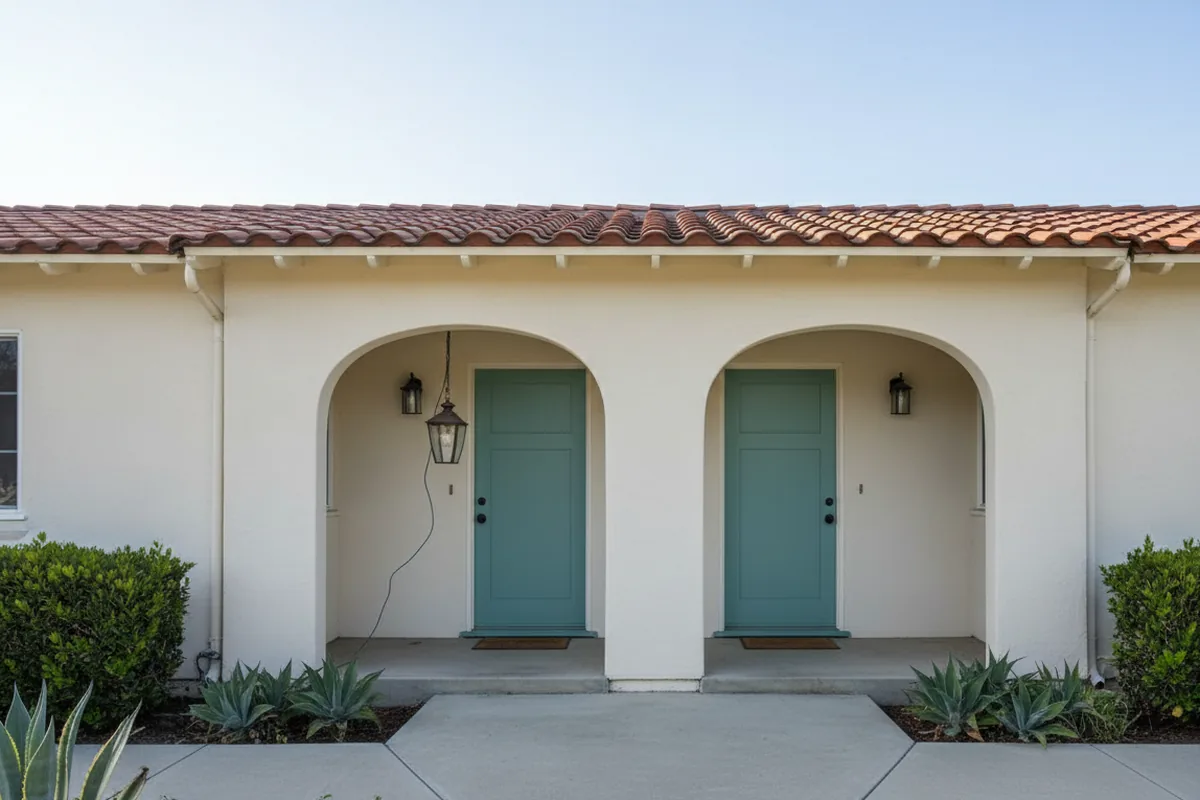
A code violation on a California rental property is a finding by a city or county enforcement officer that the building or unit falls short of local codes. The notice binds the owner of record, not the tenant. It names a correction and usually a deadline. The owner can correct the violation, get professional help, or sell the property in its present condition.
On this page
What It Means for Owners
A code violation is a government finding, not a private claim. A tenant can complain, argue or sue, but a violation exists only when an enforcement officer from a city or county inspects the property and documents a condition that does not meet the local code. That distinction matters: a disagreement with a tenant is a matter between two private parties, while a violation is an official record against the property itself.
Two paths usually lead to a rental violation. The first is a tenant complaint to the local code enforcement office, which can prompt an inspection of the unit. The second is a proactive rental inspection program, in which a city or county inspects rental units on its own schedule, whether or not anyone has complained.
California cities and counties each run their own code enforcement programs under their own ordinances. The form of the notice, the deadline, the steps to correct and the way a case is closed all vary from one place to the next. A notice in one city can look and work quite differently from a notice in the neighboring county.
At the center of most rental violations is habitability. California law sets a floor of conditions a rental unit must meet to be fit to live in, and a rental violation is usually a finding that the unit has dropped below that floor. Broader issues, such as building code violations or unpermitted work, can appear in the same notice.
The notice itself is the guide to what this particular case requires. It names the condition found, the correction required and, typically, the date by which the work is due, as set by that jurisdiction's ordinance.
Who It Affects
If the notice is addressed to you, that is because your name, or your entity's name, is on title. The duty to correct sits with the owner of record. A property manager can field the calls and receive copies, but handing the notice to a manager does not hand off the responsibility.
The tenant's position is different. The tenant may be the one who called the city, or may simply be living in the unit while the case is open. Either way, the tenant reports conditions and lives with them; the tenant is not the one who has to make the repair, and the tenant cannot open or close the violation.
The person on the other side of the notice is the code enforcement officer, who works for the city or county rather than for the tenant. The officer inspects, documents what was found and issues the notice. If the case involves permits, unpermitted construction or structural concerns, a building official may also be involved, since permits and construction inspections are a separate function from complaint response.
Two other relationships can shape what happens next. If the property has more than one owner, each co-owner holds an interest in it, and co-owners who disagree about what to do have a contested matter that is handled by an attorney. If there is a mortgage, the loan documents may require the owner to tell the lender or loan servicer about a citation; what those documents require is a question for the owner's attorney or the servicer.
Rent, Repairs and the Tenant
While a violation is open, questions about the rent tend to come up quickly, and it helps to know the shape of them before a tenant raises them. Tenants sometimes ask whether they can withhold rent while a habitability problem goes uncorrected. Others ask whether they can pay for a repair themselves and deduct the cost from rent. These are two different ideas: one involves holding back payment, the other involves the tenant doing or arranging the work and offsetting what it cost.
Both questions grow out of the same point covered above: a rental unit is expected to meet a floor of habitability, and an open violation is often a finding that it has not. That is why a notice and a rent dispute can arrive close together. The open violation, the record of what was found and the record of what has been done since all become part of the picture if a tenant raises either remedy.
Whether and how they apply to a particular unit, and what the owner's position is if a tenant raises them, is a question for an attorney.
Rules, Disclosures and Fine Print
An open violation follows the property into any sale, and California's seller disclosure rules shape how it is handled. Civil Code section 1102 sets the scope of the state's disclosure article. Its first subdivision reads:
"Except as provided in Section 1102.2, this article applies to any transfer by sale, exchange, real property sales contract as defined in Section 2985, lease with an option to purchase, any other option to purchase, or ground lease coupled with improvements of any single-family residential property."
Those duties do not change because a buyer pays cash or agrees to take the property as it is. Civil Code section 1102(c) states that "Any waiver of the requirements of this article is void as against public policy." An open code violation is generally the kind of material fact a seller is expected to disclose, and a buyer's willingness to accept the condition does not remove that expectation.
The duties are not identical for every transfer, though. Civil Code section 1102.2 exempts a list of sales and transfers, including transfers made pursuant to court order, transfers by a fiduciary administering a trust, estate, guardianship or conservatorship (with a stated exception for certain revocable-trust trustees who are former owners or occupants), "Sales or transfers from one coowner to one or more other coowners," transfers to a spouse or to a person or persons in the line of consanguinity of one or more of the transferors, and transfers to or from any governmental entity. The list continues in the statute. Two exemptions matter for many landlords: section 1102.2 also exempts transfers of any portion of a property not constituting single-family residential property, and the creation or transfer of a lease other than a lease with an option to purchase or a ground lease coupled with improvements. Whether a given rental is covered depends on the property type and the transfer. More on selling a property with code violations follows the same rules.
Some cities and counties also require a rental to pass an inspection before a sale or a change of tenancy. These are local rules, and whether one applies depends on where the property sits.
Rent and tenancy add another layer. California's Tenant Protection Act, often called AB 1482, limits rent increases and requires a just cause to end certain tenancies at covered properties. An open violation can intersect with those protections, for example when repairs require a tenant to move out temporarily. How the Act applies to a particular unit is a question for an attorney.
Options and Trade-offs
If you are weighing whether to repair or sell, the notice usually narrows the choice to a few paths. Each one shifts cost, time and effort in a different direction, and the right fit depends on the property, the tenant situation and the owner's own plans.
Correct the violation. The general sequence is to hire a contractor, obtain any permits the work requires, complete the work and ask the issuing office for a re-inspection. The office decides when the case is closed; no permit or closure is assured. Correction keeps the property and its rental income, but the owner carries the repair cost, any fines that have built up and the work of coordinating around a tenant. A contractor or inspector can describe what the repair involves, and a page on the cost to fix code violations covers the categories of expense.
Sell the property in its present condition. A property with an open violation can be sold as it stands, with the buyer taking on the correction. Disclosure duties still apply, and an open violation does not disappear at closing. When the buyer is someone who pays cash and takes the property as it is, the offer is often lower than an open-market price would be, since that buyer is absorbing the repair work, the uncertainty about what the city will require and the cost of resale. In return, the seller usually does less preparation, has fewer showings and does not depend on a buyer's loan being approved.
List with a real estate agent. An agent markets the property with the violation disclosed. Buyers may ask for a lower price or a repair credit, and some lenders hesitate over open violations, so the buyer pool can depend on the condition.
Sell without an agent. The owner handles marketing, negotiation and paperwork directly. The disclosure duties are the same as in an agent-assisted sale.
Many owners find that the clearest comparison comes from written offers and estimated net proceeds—the price less commissions, repairs, carrying costs, loan payoffs and closing costs—side by side. A page on selling a property as-is compares those sale paths further. Where a co-owner, lender, buyer, contractor or agency is in dispute with the owner, that contested matter is handled by an attorney.
Mistakes to Avoid
Most of the trouble owners run into with a rental violation comes not from the violation itself but from how it is handled in the weeks after the notice arrives. A few patterns come up again and again.
Setting the notice aside is the error with the widest consequences. Local enforcement can escalate when a deadline passes: fines can accumulate, a lien can be recorded against the property, and the city or county can pursue further action under its ordinance. A lien is a recorded claim against the property that generally has to be resolved before or at a sale.
Repairing without required permits can create a second problem. Unpermitted work may be cited as its own violation and can complicate a re-inspection or a later sale.
Planning a sale around the wrong assumption about disclosure is another. The disclosure rules described above turn on the property type and the kind of transfer, not on how the buyer pays, so the time to sort out whether a particular sale is covered is before an offer is accepted, not at closing.
Treating a tenant's move-out as the end of the case is another. The violation stays open until the issuing office closes it.
Skipping the paperwork causes trouble later. Permits, contractor invoices, photos and re-inspection results are the record that shows the work was done.
Confusing a notice with a court order is the last common mix-up. A code enforcement notice comes from a local agency; a court order comes from a judge in a filed case, and a matter that reaches court involves an attorney.
What to Do Next
The notice or citation is the first document to read closely. It names the violation, the required correction, the deadline and the contact at the issuing office. The city or county office named on it is the authoritative source for the requirements that apply to this property, because those come from its own ordinance. In Southern California, a page on code violation help covers how notices from local offices generally work.
It also helps to know whether the property falls under a local rental inspection program. Some cities inspect all rental units on a schedule, separate from complaint-driven enforcement, and that program may carry its own requirements.
Records round out the picture: prior permits, past inspection reports, contractor invoices and any written exchanges with the tenant about the condition. Together they show what has been done and when.
Many owners start by pulling the notice and the property's permit history from the issuing city or county office, and by asking that office one question: exactly what it needs to see before it will close the case.
Ready to talk through your options?
Share the details of your notice. You choose whether contractors or a sale consultant may contact you.
Get help with my propertyFrequently asked questions
Who do you report housing issues to in California?
A tenant generally reports a habitability or maintenance problem to the city or county code enforcement office, or to the local building department, depending on how that jurisdiction divides the work. If an officer inspects and finds a violation, the notice goes to the owner of record, not the tenant.
What happens if a landlord ignores a code violation notice in California?
Enforcement can escalate. Under the local ordinance, fines may accumulate, a lien may be recorded against the property, and the city or county may take further action. The specific steps and amounts come from that jurisdiction's ordinance and the notice itself.
Does a code violation have to be disclosed when selling a rental property in California?
An open violation is generally a material fact to disclose. Civil Code section 1102 covers sales of single-family residential property, whether the buyer pays cash or takes it as it is, and 1102(c) voids a waiver. Section 1102.2 exempts some transfers, including to co-owners, a spouse, a person in the line of consanguinity of a transferor, or a governmental entity.
Does a code violation close automatically when a tenant moves out?
No. A code violation is issued against the property, not the tenancy. It stays open until the issuing code enforcement office inspects and closes it, whether or not the tenant who complained still lives there.
Can a rental property with an open code violation be sold in California?
Yes, a property can be sold in its present condition. Disclosure duties apply as described above, and the buyer may take on the correction. A direct sale often brings a lower price in exchange for less preparation and less loan dependence; comparing written offers and net proceeds shows which path fits.