An owner holding this notice may be looking at a letter from an agency they have never dealt with before. It might concern a carport, an awning, a deck, a utility hookup or an addition that came with the home. The home may sit on a rented space in a park, or it may have been inherited from a parent who lived there for years. The questions come quickly. Who sent this? Does it concern the home or the park? What does it actually ask the owner to do? This guide explains how enforcement works for a factory-built home in California, what the notice asks of the owner, and how correcting, permitting and selling compare.
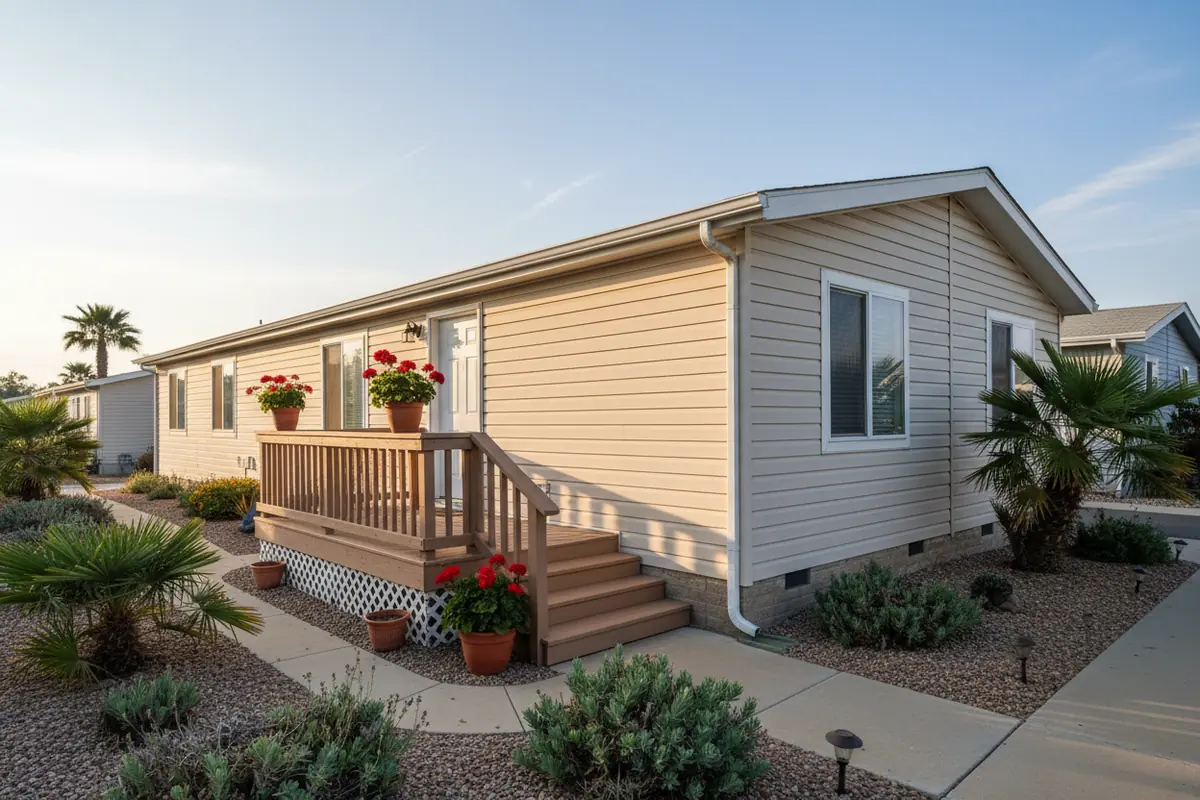
A code violation notice on a manufactured or mobile home in California says that a condition does not meet a standard. It names the rule, the correction it asks for and any deadline. In a mobile home park, the notice may come from a state agency rather than the city. An owner can correct, seek a permit or sell, and disclosure duties may still apply.
On this page
What It Means for Owners
A manufactured home is built in a factory and moved to its site. A site-built house is built in place. California law sometimes uses the older word "mobilehome" for the same kind of home. Civil Code section 1102.2, for example, uses both "manufactured home" and "mobilehome" in the same passage.
A manufactured home is often treated as personal property, meaning movable property like a vehicle. Land and the buildings fixed to it are real property. Whether a given home is personal property or has become part of the real property depends on how it was installed and how it is titled. That one fact changes how a sale, a lien or a transfer is handled.
What the notice contains
A violation notice tells the owner that something on or about the home does not meet the standard the issuing office enforces. It asks the owner to correct the condition, remove it or respond. The notice should show:
- the standard said to be violated
- the correction required
- any deadline
- the office that issued it and how to contact it
If an inspector's report comes with the notice, it often lists each item separately.
The notice goes to the person the agency treats as the owner. In a park, the owner of the home and the owner of the land are often different people. An owner who rents a space owns the home, not the ground under it. Keeping those roles straight is the first step in reading the notice correctly.
Who Enforces and Who Is Responsible
The agency that issued the notice is named on its face. That name answers a question that confuses many owners in parks: why a state office, and not the city, is writing to them.
In California, enforcement in mobile home parks has long been tied to the state Department of Housing and Community Development, often called HCD. In some places, a city or county carries out that work locally instead. Which office handles a given park depends on where the park is. The letterhead and the contact block on the notice show which office is involved for this home.
The home itself and the park around it are separate subjects:
- The homeowner controls the home, its installation and items added to it.
- The park operator controls park roads, shared utility lines and common areas.
A notice may be directed at the park operator, at the homeowner, or at both, and the owner's duty depends on which one it is.
Age also matters. Older homes may have been built under different standards than newer ones. The notice or the issuing office can say which standard it is applying to this home. For homes outside a park, on private land, the local building department may be the office involved, much as it is for other building code violations.
Disclosure When the Home Is Sold
When an owner sells, the question of what must be told to the buyer comes up quickly. California's seller disclosure rules sit in the Civil Code, in the article that begins at section 1102.
Which transfers the article covers. Civil Code section 1102, subdivision (a) says that, except as provided in section 1102.2, the article applies to "any transfer by sale, exchange, real property sales contract as defined in Section 2985, lease with an option to purchase, any other option to purchase, or ground lease coupled with improvements of any single-family residential property." Whether a particular manufactured home sale falls inside that wording can depend on whether the home is real property and on the kind of transfer. A real estate attorney can review that question for a specific home.
Waivers are void. Where the article applies, Civil Code section 1102, subdivision (c) is direct: "Any waiver of the requirements of this article is void as against public policy." A buyer paying cash, or taking the home as it is, does not change that.
Transfers the article does not cover. The duties depend mainly on the type of transfer, not on who the buyer is, although a few exemptions do turn on the parties involved. Civil Code section 1102.2 lists transfers the article does not cover, including sales or transfers "from one coowner to one or more other coowners," transfers to a spouse or to a person "in the line of consanguinity" of one or more of the transferors, and transfers to or from any governmental entity. The list continues with court-ordered sales, foreclosure-related sales, and sales by a fiduciary administering an estate or trust. It also includes "sales to the legal owner or lienholder of a manufactured home or mobilehome by a registered owner or successor in interest who is in default." Selling a property with code violations follows the same disclosure framework.
An open violation may also show up in the agency's records for the home. Where the owner disputes a finding with an agency or a park owner, that contested matter is one for an attorney.
Options and Trade-offs
Three paths come up most often once the notice is understood. Each has a real cost and a real benefit.
| Path | What it involves | Main benefit | Main cost or risk |
|---|---|---|---|
| Correct the violation | Bringing the home or installation into line with the cited standard, arranging any required inspection, keeping records | Usually closes the matter most directly | Money and arranging the work |
| Permit work done without one | Applying for a permit after the fact for an addition or alteration | Can keep work that meets current standards | Approval is not assured; some work may have to be changed or removed |
| Sell in present condition | Selling with the open violation, with any required disclosures | Less preparation, fewer showings, less reliance on buyer financing | Offer usually reflects the cost of correction |
Correct the violation. The owner brings the home or the installation into line with the cited standard. Then the owner arranges any inspection the issuing office requires, and keeps records of the work. This usually closes the matter most directly, but it takes money and arranging. What it costs to fix code violations depends on the work, the fees involved and how long the violation stays open.
Permit work done without one. Where the problem is an addition or alteration built without a permit, an owner may be able to apply for a permit after the fact. Approval is not assured. It depends on whether the work meets the standards that apply now, and some work may have to be changed or removed.
Sell the home in its present condition. A manufactured home can be sold as it stands, with the open violation. Where Civil Code section 1102 applies, the seller still owes its disclosures unless a section 1102.2 exemption fits the transfer (see the disclosure section above). A buyer who takes on an uncorrected home usually builds the cost of correction into the offer. A direct cash offer is often lower than what a corrected home might bring on the open market. That buyer carries the repairs, the risk and the cost of reselling. In return, the seller gets less preparation, fewer showings and less reliance on a buyer's financing. A sale through a real estate agent or a direct sale does not change what the law requires of the seller.
Comparing written offers and estimated net proceeds shows which path fits a given home. Net proceeds mean the price less commissions, repairs, carrying costs, loan payoffs and closing costs. Where co-owners disagree about the path, that contested matter is handled by an attorney.
Common Mistakes
Setting the notice aside. This is the most costly error. A deadline on the notice keeps running whether or not the owner opens the letter, and the notice may say what follows if it passes. Open violations can also grow costly over time, as code enforcement fines show.
Misreading who the notice is for. A homeowner may assume a citation about utilities or grading belongs to the park when it names the home. A park operator's problem may also be taken on by a homeowner who has no duty to fix it. The addressee line and the cited condition settle which one it is.
Rushing a fix. Doing more unpermitted work to cure a cited condition can add a second violation to the first. The notice, and the office that issued it, can say whether the correction itself needs a permit.
Treating a cash or as-is sale as a way around disclosure. The disclosure section above explains why this does not work where the article applies.
Mixing up personal property and real property rules. Title, liens and sale paperwork follow different routes depending on how the home is held.
Assuming every home is held to the same standard. Ignoring the home's age can lead an owner to fix the wrong thing. The issuing office can confirm which standard applies.
Where the Key Information Is Found
- The notice: the cited standard, the required correction, any deadline and the issuing office.
- The inspector's report, if any: each item listed separately.
- The issuing office: where a city or county office issued the notice, its contact details should appear on the notice, and may also be available through that local government's building or code enforcement office.
- Title or registration papers: whether the home is personal or real property, and who the owner of record is.
The code violation help overview explains how notices, correction and permits fit together. With the notice and the home's title papers together, it becomes possible to see which agency issued the notice and whether it is directed at the home or the park.
Ready to talk through your options?
Share the details of your notice. You choose whether contractors or a sale consultant may contact you.
Get help with my propertyFrequently asked questions
Who enforces code violations in a California mobile home park — HCD or the city?
The notice names the agency that issued it. In many California parks that is the state Department of Housing and Community Development. In some places a city or county handles that work locally. Where the park is located decides which office is involved.
What happens if I ignore a mobile home code violation notice in California?
The deadline on the notice keeps running. The notice itself may describe what follows if the owner does not respond or correct the condition. An open violation can also remain in the agency's records for the home and come up later, including at a sale.
Does a code violation have to be disclosed when selling a manufactured home in California?
Where the disclosure article beginning at Civil Code section 1102 applies, a waiver is void, so a cash or as-is sale does not remove the duty. Section 1102.2 exempts some transfers based on who the buyer is, such as a co-owner, a spouse, a person in the line of consanguinity of a transferor, or a governmental entity.
Can I sell a manufactured home that has an open code violation?
Yes, a manufactured home can be sold in its present condition. The seller still owes any disclosures Civil Code section 1102 requires, unless a section 1102.2 exemption fits. A buyer taking on the violation usually accounts for the cost of correction in the offer.
How do I pass a mobile home inspection in California?
The office that issued the notice inspects the corrected condition. The notice or the inspector's report lists what must be corrected before that inspection. A contractor or an inspector can review the work itself. Passing depends on the work meeting the cited standard, and no result is assured in advance.
What is the difference between a manufactured home and a mobile home in California?
Both terms describe factory-built homes moved to a site. "Mobilehome" is the older word, and it still appears in California law alongside "manufactured home." Civil Code section 1102.2, for example, refers to "a manufactured home or mobilehome."