You may be looking at a converted garage or a backyard unit that was built without permits, by you, by a past owner or by someone whose property you inherited. Perhaps a code enforcement notice arrived, a buyer's lender asked questions, or a permit search turned up nothing for space a tenant lives in. The decision in front of you is whether to legalize the unit, remove it, sell the property as it stands, or take another path, and what each of those asks of you.
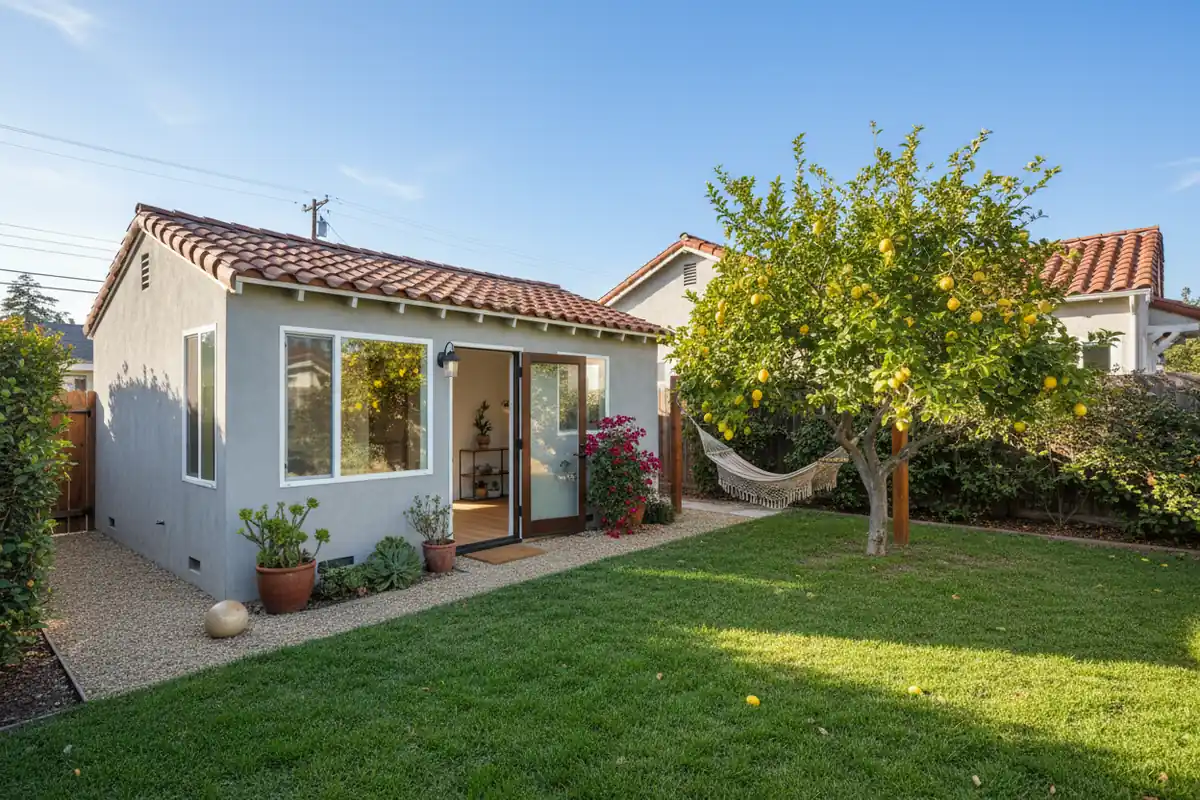
An unpermitted ADU or garage conversion in California can often be legalized through the local building department's permit process. State law sets a statewide floor for accessory dwelling units, and recent legislation widened the paths for older unpermitted units. Whether a particular unit qualifies depends on its condition, its history and the city or county where it sits.
On this page
Key Takeaways
A few terms come up throughout this page. An accessory dwelling unit, or ADU, is a second, smaller home on the same lot as a main house. It may be detached, attached, or built inside existing space. A garage conversion is a garage turned into living space, sometimes into a full ADU. Either one is "unpermitted" when the work was done without the building permits and final inspections the city or county required.
- State law sets the floor, and local departments run the process. California's Government Code contains the statewide ADU rules. Each city's or county's building department takes the applications, sets the fees and performs the inspections.
- Legalization paths have widened. Recent legislation, including AB 2533 (2024), expanded the routes available for unpermitted ADUs built before certain dates. The local building department can say how those rules apply to a specific unit.
- The state housing agency publishes guidance. The California Department of Housing and Community Development, known as HCD, is the state agency that publishes ADU guidance for owners and local governments.
- Legalization is one option among several. Removal, a sale in present condition and a direct sale are also available. Which one fits depends on the property's facts.
When This Option Fits
Legalization tends to come up in a handful of familiar situations. An owner wants to rent the unit and have it recognized as a legal dwelling. An owner is selling, and a buyer's lender wants the space permitted before it will count it. Or a code enforcement notice has arrived asking the owner to correct the unpermitted work, and a permit is one way to do that. The building code violations behind such notices often include unpermitted conversions.
Whether legalization is realistic turns on one central question: can the existing structure meet the building standards that apply to it? The local building department answers that question, not this site and not a seller or a buyer. Ceiling height, exits, electrical and plumbing work, fire separation and how the unit was framed can all bear on the answer.
Legalization is not always possible, and even where it is possible it is not always cost-effective. A structure that cannot be brought up to applicable standards, or that would need more work than the owner can carry, points toward the other options described later on this page.
How It Works, Step by Step
Every city and county sets its own forms, fees and order of review, so the sequence below is a general picture of how the process usually unfolds rather than a fixed checklist.
- Ask the local building department about its pathway. Some cities and counties publish specific pages for unpermitted ADUs. Los Angeles County, Oakland, San Diego and San Mateo County are among the places that have done so. Their programs are examples only and apply in those places alone. The department for the property's own city or county is the one whose rules count.
- Submit a permit application. Applications generally include a site plan showing the lot and buildings, a floor plan of the unit, and a description of the work already done. The department's own checklist lists what it requires.
- Inspection. A building inspector looks at the existing structure and compares it with the standards that apply. Walls, ceilings or floors may need to be opened so wiring, plumbing or framing can be seen.
- Corrections. Where the structure falls short, the owner brings it into compliance before a permit is issued. This step varies most in cost and complexity. One unit may need a new smoke alarm, and another may need rewiring or a new exit.
- Permit issuance and final sign-off. Once the corrections pass inspection, the department issues the permit and finals it. The unit then appears in the property's permit record as approved work.
For Bay Area properties, the Association of Bay Area Governments, a regional planning body, publishes ADU resources for cities and counties in the region.
Costs, Timing and Trade-offs
The cost of legalizing a unit falls into several categories:
- Permit fees. The local jurisdiction sets these and publishes them on its building department's pages.
- Inspection fees. Some departments charge these separately.
- Required corrections or upgrades. These can include electrical, plumbing, fire safety and egress work. Egress means a safe way out in an emergency, such as a window or door of a required size.
- Professional fees. An architect may draw plans, a contractor may perform the corrections, and a permit expediter may help an owner move the application through the department.
This page gives no dollar figures. Fees differ from one city or county to the next, and the jurisdiction's own fee schedule is where the current amounts appear.
Time depends on the scope of the corrections, the department's review queue, and whether the structure needs significant work to meet standards. A unit built close to code moves differently from one that needs a new foundation or electrical service.
The trade-off is simple to state. Legalization gives the unit permitted status and can allow it to be rented as a legal dwelling. In return, the owner pays up front and spends time, and the result is not assured until the permit is issued and the final inspection passes. If the department finds problems that cost more than the unit is worth to the owner, the money already spent on plans and fees does not come back.
Options to Compare
These choices have no single correct order. Each one asks something different of the owner. The table below summarizes them, and the paragraphs that follow explain each in more detail.
| Option | What it involves | What the owner takes on | Main trade-off |
|---|---|---|---|
| Legalize | Permit application, inspection, corrections, final sign-off | Fees, correction work, time | A permitted unit if the work passes, but no assured result until then |
| Remove or demolish | Returning a garage to garage use or taking down a structure, usually under its own permit | Removal permit and work | Ends the unpermitted use, and the living space goes with it |
| Sell in present condition | Open-market sale, with or without an agent | Required disclosures | Lender limits can narrow the pool of buyers |
| Sell directly as-is | Sale to a buyer, often cash, who accepts the unpermitted work | Required disclosures | Often a lower price, with less preparation and less dependence on a buyer's loan |
Legalize. This means following the permit pathway described above, accepting its cost and timing, and ending with a permitted unit if the work passes.
Remove or demolish the unpermitted work. Removal can mean returning a converted garage to garage use or taking down a detached structure. Removal usually needs its own permit. Sometimes a code enforcement order requires it, for example where the department finds the structure cannot be made to meet standards. The order states what is required.
Sell the property in its present condition. A property with an unpermitted ADU can be sold as it stands, on the open market through a real estate agent or without one. The seller still owes the disclosures California law requires. California's Civil Code sets those duties, and a real estate attorney or a real estate agent can explain which apply to a specific sale. A buyer's lender may limit what it will finance, and that can narrow the pool of buyers.
Sell directly to a buyer who takes the property as it is. Some buyers pay cash and accept the unpermitted work along with the rest of the property. Their offers are often lower than what the property might bring on the open market. That buyer takes on the legalization or removal work, the risk that the department says no, and the cost of reselling later. What the seller gives up in price buys less preparation, fewer showings and less dependence on whether a buyer's loan comes through.
A sale of either kind does not avoid, skip or shorten a required disclosure, a lien or an open enforcement order. Those duties follow the property and the owner whether or not the buyer pays cash.
Owners comparing these paths usually look at written offers and estimated net proceeds side by side. Net proceeds means the price less commissions, repairs, carrying costs, loan payoffs and closing costs. That comparison shows which path fits a particular owner.
A contested matter is a separate subject handled by an attorney. That includes a dispute among co-owners, a conflict with a lender, or a case that has already been filed.
What to Have Ready
A few records make a conversation with a building department, an agent or anyone else more productive:
- Property records. These include the assessor's parcel number, which is the number the county uses to identify the lot, and the current deed or title documents.
- Existing permits. These are any permits on file for the property. The local building department or the assessor's office keeps these records.
- A description of the unpermitted structure. This means its approximate square footage, the year it was built if known, and its current use, such as a rental, family housing or storage.
- Any notice already received. This includes any code enforcement notice, citation or order, along with its notice number and the name of the issuing department.
Different professionals answer different questions. An appraiser addresses value. A contractor or an inspector addresses condition and the scope of repairs. An attorney addresses title, disclosure and disputes. This site does not give legal, tax or appraisal advice, set a value or do construction work.
For many owners, a useful starting point is the local building department's official ADU page and whether it describes a legalization pathway for existing unpermitted units.
Local Context
California's Government Code establishes statewide ADU rights and the state's legalization requirements. Each city and county still administers its own permit process, sets its own fees, and may run its own amnesty or legalization program. In practice, two neighboring cities can handle the same garage conversion differently.
Several jurisdictions have published program pages that show what local pathways can look like:
- Los Angeles County, through its Public Works department
- The City of Oakland
- The City of San Diego, where owners facing enforcement can also read about San Diego code violation help
- San Mateo County
- Santa Cruz County
Each program belongs to its own jurisdiction. None of them sets the rules for a property somewhere else.
At the state level, HCD publishes an ADU handbook. For Bay Area cities and counties, the Association of Bay Area Governments publishes regional ADU resources. For the rules, fees and timelines that actually govern a particular unit, the reader's own city or county building department is the authoritative source.
Ready to talk through your options?
Share the details of your notice. You choose whether contractors or a sale consultant may contact you.
Get help with my propertyFrequently asked questions
What is the smallest ADU California law allows?
California's Government Code sets statewide size rules for ADUs that local governments must follow. HCD's ADU guidance describes the current minimum and maximum sizes. The local building department can say how those size rules apply to a particular unit.
Do appraisers treat unpermitted ADUs differently from permitted ones?
Often, yes. Unpermitted space is typically treated differently from permitted space in an appraisal. The specific effect depends on the appraiser's methodology and on the lender's requirements. An appraiser can address the value question for a specific property.
What are the current California ADU laws that affect unpermitted units?
The ADU statutes sit mainly in the Government Code. The Legislature has amended them in recent sessions, including through AB 2533 (2024), which expanded legalization paths for some older unpermitted units. HCD publishes guidance on the current state of the law.
Is there an amnesty program for unpermitted ADUs in California?
Some cities and counties have published amnesty or legalization pages, including Oakland, San Diego, Los Angeles County and San Mateo County. Recent state legislation also widened legalization paths. The local building department can say whether a program exists in a given jurisdiction.
Can an owner sell a property with an unpermitted ADU?
Yes. Unpermitted status does not by itself prevent a sale, though it does affect what a buyer's lender may accept. The seller's disclosure duties, described in the options section above, apply to any sale.
What happens if an owner does nothing about an unpermitted ADU?
If a code enforcement notice has been issued, it usually calls for a response by a date the notice states, such as a correction, a permit application or an appeal. Ignoring a notice can lead to fines or an order to remove the structure. The issuing department can answer questions about a specific notice.
Does legalizing an ADU affect property taxes?
It can. Adding permitted square footage or a new permitted unit can change the assessed value, which affects property taxes. The county assessor's office answers property-tax questions for a specific parcel. Income-tax questions go to a CPA, an enrolled agent or a tax attorney.