You may be holding a notice, a citation or a red tag that lists repairs and a date, and the money to do the work is not there. You might be living in the home on a fixed income. You might be a landlord whose rents do not cover the job, or an heir who received a house along with someone else's unpermitted addition. This guide covers what the notice means when funds are short, which California rules apply if the property is sold, and how each realistic path compares.
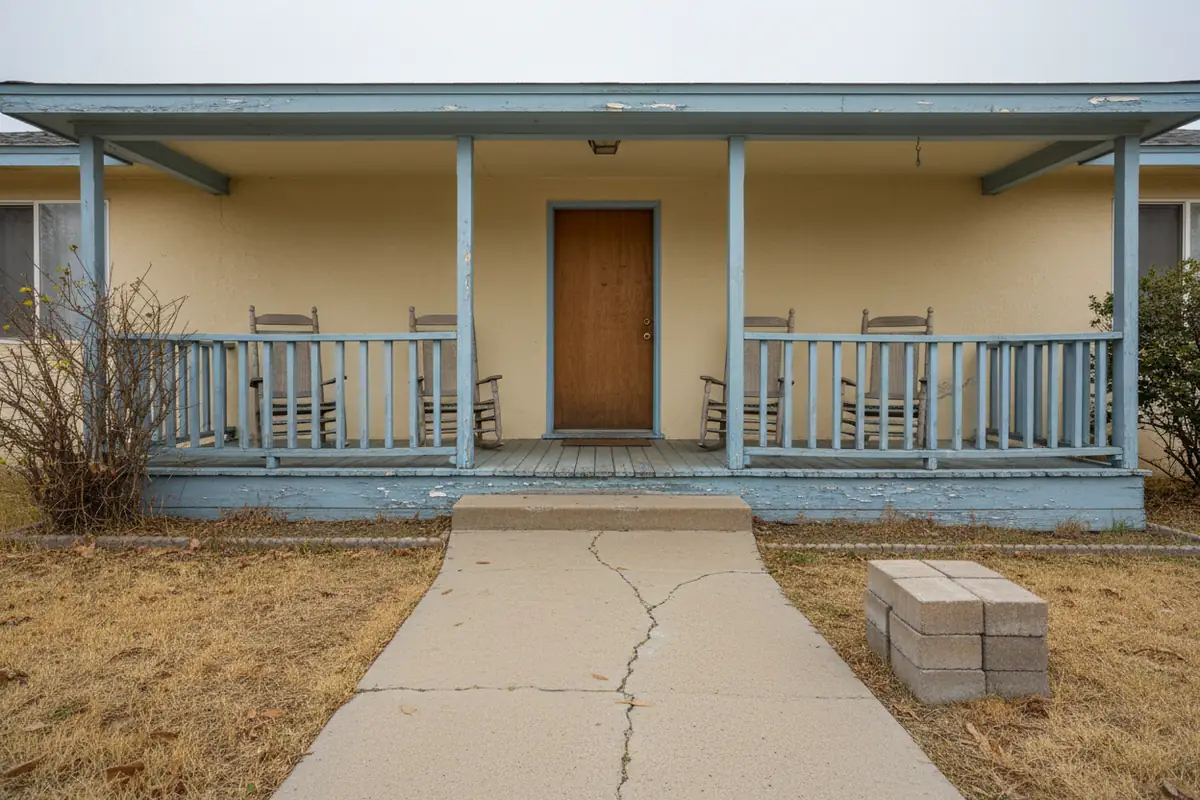
When a California owner cannot afford to fix code violations, the violations stay open and enforcement keeps going. The owner still has paths, though. These include local repair loans or grants where a city or county offers them, a negotiated compliance schedule with the agency that issued the notice, and selling the property in its present condition, with the seller's disclosure duties intact.
On this page
What It Means for Owners
A code enforcement notice or citation sets a correction deadline. A code enforcement officer is the local official who inspects and cites a violation. The deadline does not move because the owner lacks money. Being unable to pay is not a legal defense that stops enforcement, but it does shape which options are realistic.
While a violation stays open, many local codes allow fines and administrative penalties to keep adding up. Some charge daily amounts. How those charges grow is explained in our guide to code enforcement fines and penalties. The amounts and the rules for them are set by each city's or county's ordinance, so the notice itself and the issuing agency are the places to find them.
If an owner does not act, many cities and counties have authority to correct the condition themselves. This is called abatement. The agency can then charge the cost to the owner and record a lien. A lien is a claim against the property for money owed. For severely substandard buildings, some jurisdictions can ask a court to appoint a receiver. A receiver is a person appointed by the court to take control of the property and oversee the repairs. A receivership is an enforcement outcome. It is not something the owner chooses.
Who It Affects
The situations behind this question differ, and the differences matter.
- Owner-occupants on low or fixed incomes. Here the home and the repair bill compete for the same limited budget.
- Landlords. Rental income may not cover the correction work. The condition of the units can also raise housing-code issues for the tenants.
- Heirs. An inherited property may arrive with existing violations or unpermitted work.
- Investors and later buyers. Someone who acquired a property with open violations takes on the open file.
How title is held affects who can act. Title might sit with one owner, with several co-owners, in a trust or in an estate. Each arrangement changes who can sign a compliance agreement or authorize a sale. The recorded deed and any trust or court papers show who holds that authority, and an attorney can explain what those documents mean in a particular case.
The property's condition matters too. A substandard, red-tagged or uninhabitable building may face different enforcement steps, and repair-assistance programs may treat it differently. Our overview of building code violations explains how those categories are defined.
Rules, Disclosures and Fine Print
A seller's disclosure duties do not depend on whether the buyer pays cash or accepts the property as it is. Civil Code section 1102(a) states that the disclosure article applies "to any transfer by sale, exchange, real property sales contract as defined in Section 2985, lease with an option to purchase, any other option to purchase, or ground lease coupled with improvements of any single-family residential property," except as Civil Code section 1102.2 provides. Civil Code section 1102(c) adds: "Any waiver of the requirements of this article is void as against public policy." An owner cannot sign the duty away.
Those duties are not the same for every buyer. Civil Code section 1102.2 lists transfers the article does not cover, including:
- "Sales or transfers from one coowner to one or more other coowners"
- sales or transfers "made to a spouse, or to a person or persons in the line of consanguinity of one or more of the transferors"
- sales or transfers "to or from any governmental entity"
- sales pursuant to court order, and certain foreclosure-related transfers
The same section also exempts sales or transfers by a fiduciary "in the course of the administration of a trust, guardianship, conservatorship, or decedent's estate." That exemption does not apply where the trustee is a natural person who is a trustee of a revocable trust and is a former owner of the property or was an occupant in possession of the property within the preceding year. The section lists other exemptions as well.
"As-is" describes the condition a buyer accepts. It does not remove recorded liens. An abatement lien or a citation lien recorded against the property generally stays attached to it through a sale unless it is paid or otherwise resolved in the transaction. A property can be sold in its present condition. Any requirement that applies to the particular sale still applies.
Options and Trade-offs
Each path below trades something. None of them fits every owner.
Local repair assistance. Some California cities and counties run home repair or rehabilitation loan and grant programs for lower-income homeowners, often using state or federal housing funds. In practice, that means the local program is usually the point of contact, even when the money behind it comes from a state or federal source. Whether a program exists locally, who qualifies, and whether a property already in enforcement can still take part are questions for the city or county housing office. The help can be real, but applications take time and funding is limited.
A compliance schedule. Some code enforcement agencies will agree to a phased schedule that extends the correction date in exchange for steady, documented progress. Some jurisdictions also have hardship provisions that may reduce or defer fines for low-income owner-occupants. Neither is assured. The agency named on the notice decides, and the length and terms of any schedule are set by that agency. A schedule spreads the work out, but it binds the owner to its milestones.
Correcting in stages with permits. A contractor can scope the work and the likely permit path. This lets an owner see which items cost the most, as laid out in our guide to what correction costs.
Listing with a real estate agent. An open-market listing reaches the widest pool of buyers. It also brings preparation, showings, and buyers whose lenders may balk at open violations.
Selling directly to a buyer who takes the property as it is. A cash buyer who accepts the open violations usually offers less than an open-market price, because that buyer takes on the repair cost, the risk, and the expense of reselling. In return, the seller gets less preparation, fewer showings and less reliance on a buyer's loan. As covered above, the seller's disclosure duties and any recorded liens are unchanged. More detail is in our guide to selling with code violations.
Comparing written offers side by side, along with estimated net proceeds, is how an owner sees which path fits. Net proceeds are the price less commissions, repairs, carrying costs, loan payoffs and closing costs. Receivership, by contrast, is not on the owner's list of choices. It is what an agency may pursue if nothing moves.
Mistakes to Avoid
Not responding to the notice. Silence is the costliest response. Fines and administrative costs can keep running, and the agency's power to abate and record a lien does not lapse because the owner never answered.
Treating a distressed sale as a reset. Neither a cash sale nor an as-is sale clears recorded liens or disclosure duties on its own. Civil Code section 1102(c) voids a waiver, and the exemptions in Civil Code section 1102.2 turn on the type of transfer and who the buyer is, not on the property's condition.
Signing a compliance agreement without reading its milestones. A missed step can lead the agency to resume or escalate enforcement.
Waiting too long to ask about repair help. Some local programs may limit help once a property is in abatement proceedings, so early inquiries keep more options open.
Mixing up liens. A code enforcement lien and a property tax lien are different instruments with different procedures.
Where co-owners, a lender, a buyer, a contractor or the agency are in conflict with the owner, or a case has been filed, the matter is contested. A contested matter, including a challenge to a citation, is handled by an attorney, who can explain which review or appeal process the local ordinance provides.
What to Do Next
The notice is the starting document. It names the issuing agency, the code sections cited, the correction date and the officer to contact. The city or county housing office is where to ask about local repair loans or grants. The county recorder's office is where any recorded lien would appear.
Different professionals handle different parts of the problem:
- A contractor or an inspector assesses the repair scope.
- An appraiser sets a value.
- A CPA, an enrolled agent or a tax attorney reviews income-tax questions.
- An attorney handles a contract, a title question or a contested enforcement matter.
A practical next step is to locate the original notice and check the county recorder's records for any lien. With both in hand, the owner can ask the issuing agency whether a compliance schedule or hardship provision is available for this property.
Ready to talk through your options?
Share the details of your notice. You choose whether contractors or a sale consultant may contact you.
Get help with my propertyFrequently asked questions
What happens if you don't fix a code violation?
Under many local codes, fines and administrative costs can keep adding up while the violation stays open. The agency may correct the condition itself and record a lien for the cost. For severely substandard buildings, some jurisdictions can ask a court to appoint a receiver to oversee repairs.
Can a property with open code violations be sold in California?
Yes. A property can be sold in its present condition, and the buyer takes on the open file. For transfers of single-family residential property covered by Civil Code section 1102, its disclosure duties apply whether or not the buyer pays cash, and a waiver is void. Civil Code section 1102.2 exempts certain transfers, such as transfers to a co-owner or a governmental entity.
Are there grants or loans to help California homeowners fix code violations?
Some California cities and counties offer home repair or rehabilitation loans and grants for lower-income homeowners. Availability, eligibility and timing vary by place. The local city or county housing office can say what exists and whether a property already in enforcement qualifies.
Can you negotiate a payment plan or compliance agreement with code enforcement?
Sometimes. Some agencies agree to a phased schedule that extends the correction date in exchange for documented progress. The agency named on the notice decides, and approval is not assured. Missing a milestone can lead the agency to resume or escalate enforcement.
Does a cash buyer or as-is sale remove code violation liens from a California property?
No. A recorded lien generally stays with the title unless it is paid or otherwise resolved in the transaction. A cash or as-is sale also does not change the seller's disclosure duties.
Can code enforcement be sued?
A challenge to a citation, a fine or an inspection is a contested legal matter. An attorney can review the facts and explain which process applies.