This page is for an owner holding a notice, a citation or a red tag that names electrical work. It is also for an owner who has found unpermitted circuits or a panel swap from a past renovation. The work may have been done years before the owner bought or inherited the house. The question now is practical: what the notice asks, how the work gets corrected or legalized, and what a sale would involve if correcting it is not the path the owner chooses.
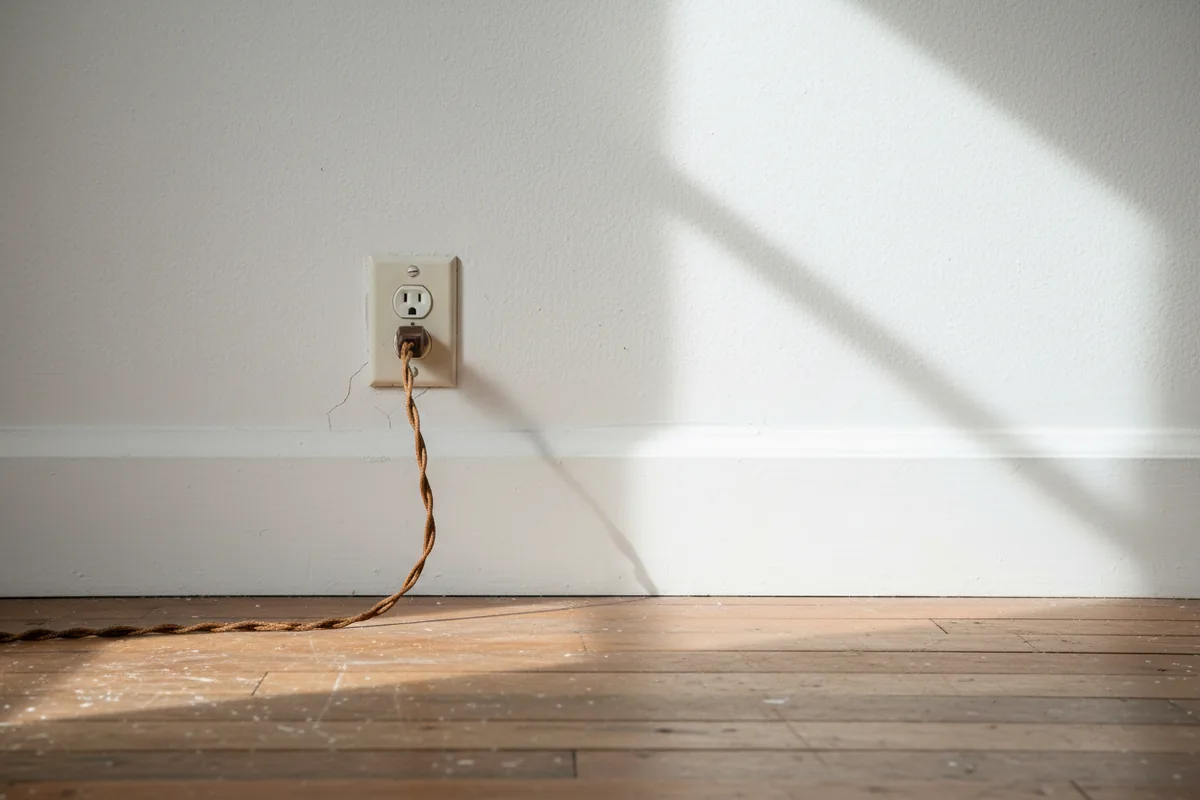
An electrical code violation means wiring, a panel or a circuit in a California home does not meet the state's electrical standards, often because it was installed without a permit. Correcting it usually takes a permit from the local building department, an inspection and a final sign-off. A home can also be sold as is, and California's seller disclosure rules generally still apply.
On this page
What It Means for Owners
The California Electrical Code sets the standard. It is Part 3 of Title 24 of the California Building Standards Code. It covers how electrical installations in buildings are to be done. A violation exists when wiring, a panel, a circuit or other electrical work in the home does not meet that standard.
A violation can come to light in several ways. These include a neighbor's or tenant's complaint, an inspection on a permit for other work, an inspection tied to a sale, and a code enforcement sweep of an area. The notice or citation that follows names the specific condition found. It typically asks the owner to correct that condition and to obtain any permit the work requires.
Unpermitted work is one of the most common categories. Unpermitted work is work done without the building permit the local building department required. For electrical work, that often means an added circuit, a replaced or upgraded panel, or new wiring run through walls or an addition.
The correction path generally has three steps. The owner obtains a permit, the work is inspected, and the building department signs off. Sometimes this happens after the work was already done, which is often called an after-the-fact permit. In that case an inspector may need to see wiring that is now behind finished walls. That can mean opening some of those walls. The wider subject of building code violations follows the same general pattern.
Who It Affects
Buyers and heirs often face electrical violations they did not create. A prior owner may have added circuits or swapped a panel without a permit, and the condition stays with the property after it changes hands.
Landlords carry a second layer of concern. Rental housing has to be fit to live in, and unsafe wiring can raise habitability questions alongside the code issue itself. A tenant's complaint is also one way a violation surfaces.
Heirs and estate representatives sometimes discover an open violation while settling an estate. It can show up in the permit records, in a notice that arrives at the property, or during a sale inspection.
Investors who acquire older or distressed homes commonly find electrical work from earlier renovations that never went through a permit.
Two roles are easy to confuse. A home inspector examines the property, usually for a buyer, and writes up the conditions observed. A code enforcement officer works for a city or county and can issue a notice or citation. A home inspector is not a code enforcement officer and does not issue citations. A buyer's inspection report that flags electrical conditions is not a citation. On its own, that report does not open a violation with the city or county.
Rules, Disclosures, and Fine Print
Enforcement is local. City and county building departments administer and enforce the California Electrical Code, and their procedures differ from place to place. An owner in El Cajon, Escondido, Vista or an unincorporated area may see different notices, steps and fees. The local department's own ordinance and pages are where those details come from.
Selling raises California's seller disclosure rules. Civil Code section 1102 says the disclosure article "applies to any transfer by sale, exchange, real property sales contract as defined in Section 2985, lease with an option to purchase, any other option to purchase, or ground lease coupled with improvements of any single-family residential property," except as Civil Code section 1102.2 provides. Subdivision (c) adds: "Any waiver of the requirements of this article is void as against public policy." In plain terms, a buyer's agreement to waive disclosure does not remove the seller's duties. Those duties also do not change because a buyer pays cash or accepts the property as it is.
The duties can change depending on the kind of transfer and who the buyer is. Civil Code section 1102.2 lists transfers the article does not cover. The list includes:
- certain court-ordered and foreclosure-related sales
- most transfers by a fiduciary administering a trust, guardianship, conservatorship or decedent's estate (the exemption does not apply to some revocable-trust trustees who are former owners or recent occupants)
- "Sales or transfers from one coowner to one or more other coowners"
- transfers to a spouse, or to a person "in the line of consanguinity" of a transferor, meaning a blood relative in a direct line
- transfers "to or from any governmental entity"
The list continues in the statute. Whether an exemption fits a given sale depends on the facts, and an attorney can review that question.
Options and Trade-offs
An owner facing an electrical violation generally chooses among a few paths. Each one has costs and limits. The cost to fix code violations depends on fines, permit and plan fees, and the repair work, and those figures come from the local department and the electrician.
Correcting the violation. The owner obtains the permit, an electrician performs or documents the work, and the work passes inspection. This path is meant to close the violation and leave a clear permit record. A clear record can make a later sale simpler to explain to buyers. Approval is not assured, though, and the work can take time and money.
Selling the property in its present condition. A house with open electrical violations can be sold in its present condition. The seller's disclosure duties under Civil Code section 1102 remain, so the violations are disclosed to any buyer whose purchase is not exempt under Civil Code section 1102.2. A sale also does not make the violation disappear. Selling a property with code violations involves the same disclosure framework whether the sale is listed with a real estate agent or made without one.
Selling directly to a buyer who pays cash. In this kind of sale, the buyer takes the property as it is. This does not remove the seller's disclosure duties or the open violation. A direct offer is often lower than an open-market price, because that buyer takes on the repairs, the risk and the cost of reselling. In exchange, the seller usually has less preparation, fewer showings and less dependence on a buyer's loan.
Comparing paths is clearer with real numbers. Owners compare written offers and estimated net proceeds, meaning the price less commissions, repairs, carrying costs, loan payoffs and closing costs. That comparison shows how the options stack up without settling which one fits.
A dispute with a co-owner, a lender, a contractor or an agency is a different subject. An attorney handles a contested matter.
Mistakes to Avoid
Setting the notice aside. Ignoring a notice does not close the violation. Depending on the city's or county's procedures, more citations or stronger enforcement steps can follow.
Fixing it without a permit. Doing new electrical work without a permit to correct an old violation can create a second round of unpermitted work.
Treating an inspection report as a citation. A buyer's inspection report and a code enforcement citation come from different sources and have different legal effects.
Assuming a cash or as-is sale ends disclosure. Civil Code section 1102(c) voids a waiver, and the duties remain unless a Civil Code section 1102.2 exemption applies.
Assuming every city handles enforcement the same way. The electrical standard applies statewide, but each city and county runs its own enforcement process.
What to Do Next
The original notice or citation is the place to start. It states what the building department found and what correction it requires, and its wording defines the scope of the work.
The local building department's permit records show whether anyone ever pulled a permit for the electrical work in question. An owner can request a permit history for the property. Questions about a violation's status, or the steps to close it, go to the building department or code enforcement office for the city or county where the property sits. Owners across the region can find more on code violation help.
A practical first step is a permit history for the property from the local building department. Read next to the notice, it shows which electrical work was permitted and which was not.
Ready to talk through your options?
Share the details of your notice. You choose whether contractors or a sale consultant may contact you.
Get help with my propertyFrequently asked questions
Do home inspectors report code violations to the city or county?
Home inspectors document the conditions they observe. They are not code enforcement officers and do not file citations with a building department. A home inspection report and a code enforcement citation are separate documents with different legal effects, and the report alone does not open a violation.
What electrical work typically requires a permit in California?
New circuits, panel replacements or upgrades, and new wiring generally go through a permit from the local building department, under the California Electrical Code. The exact scope of work that needs a permit, and the fee, are set locally. The local department's own pages and staff are the source for those details.
Does a cash buyer eliminate the seller's duty to disclose electrical violations?
No. How a buyer pays does not change the duties, and Civil Code section 1102(c) voids any waiver. Exemptions under Civil Code section 1102.2 turn on the kind of transfer and who the buyer is, such as a co-owner, a spouse, a direct blood relative or a governmental entity.
Can a property with open electrical code violations be sold?
Yes. A property can be sold in its present condition. The disclosure duties described above still apply to non-exempt buyers, and the open violation does not go away because of the sale. Correcting first produces a permit record, while selling as-is shifts the repair work to the buyer.
What is the California Electrical Code and where does it come from?
It is Part 3 of Title 24 of the California Building Standards Code. It sets statewide standards for electrical installations in buildings. City and county building departments administer and enforce it, and their procedures vary from place to place.
What happens if an owner ignores a code enforcement notice for electrical violations?
The violation stays open. Additional citations or escalating enforcement action may follow. What happens next depends on the city's or county's own ordinance and procedures.