Skip to content

Unpermitted Work and Legalization

An Illegal Rental Unit on Your Property

Updated November 17, 2026

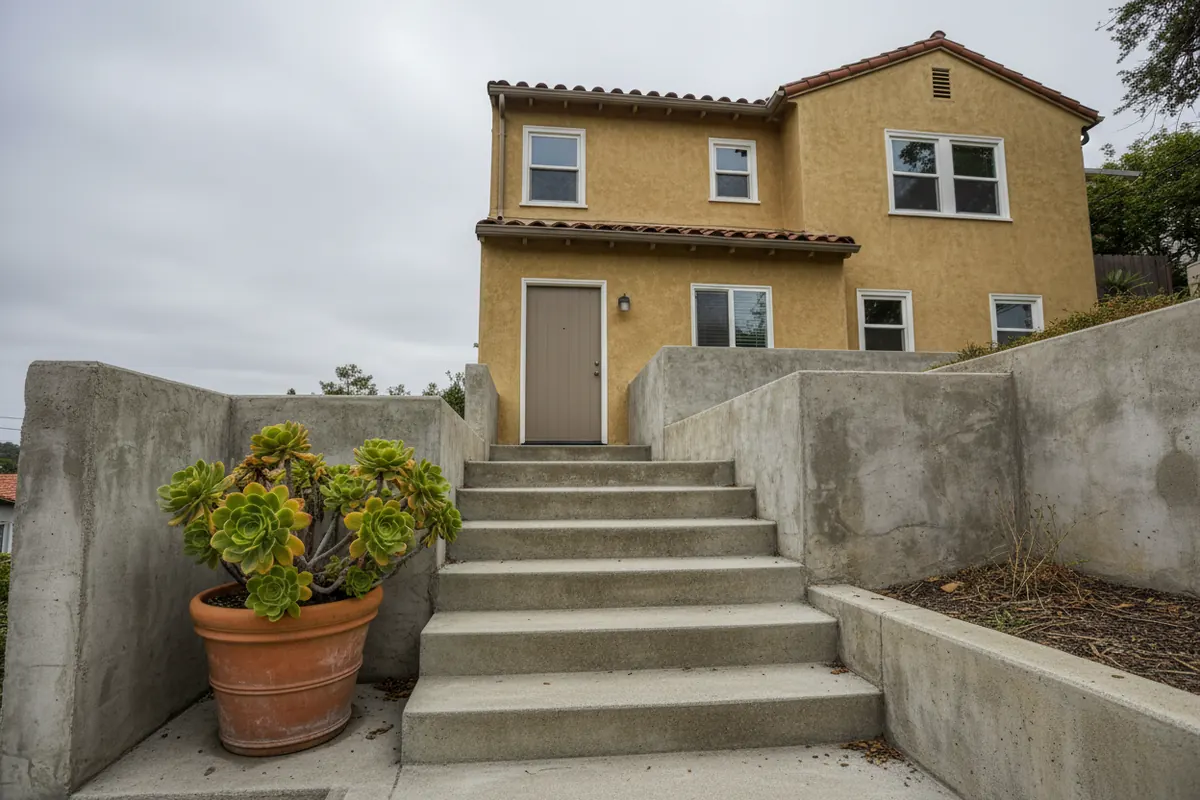
A side stair down to a lower-level unit beneath a hillside house.
Immediate answer

An illegal rental unit in California is a place someone lives in or rents that never received the permits, occupancy approval or zoning approval the city or county requires. The owner of record is responsible for it. The usual paths are to legalize the unit, remove it or stop using it, or sell the property in its present condition with full disclosure.

On this page
  1. What It Means for Owners
  2. Who It Affects
  3. Rules, Disclosures and Fine Print
  4. Options and Trade-offs
  5. Mistakes to Avoid
  6. Where Owners Usually Start
  7. Frequently asked questions
  8. Sources

An owner in this position may be holding a notice of violation from a city code enforcement office. Or the owner may have just learned that the garage apartment or back cottage on a newly bought or inherited lot was never approved. A tenant may live there now. The questions tend to arrive all at once: whether rent can still be collected, what the city can order, and whether the unit can ever be made legal.

This guide follows the situation in the order code enforcement usually does. It starts with what the violation means for the owner, then turns to the tenant, the disclosure rules for a sale, and how correction, removal and an as-is sale compare.

What It Means for Owners

In this setting, "illegal" usually means unpermitted. A unit is unpermitted when it is rented or occupied without the building permits, the certificate of occupancy (the local sign-off that a space may be lived in), or the zoning approval the city or county requires. Converted garages, basement apartments and enclosed additions are common examples.

Two situations look alike but are not the same. In one, the unit was never permitted at all. In the other, work began under a permit that lapsed, or a permitted space, such as a garage or workshop, was turned into living space without approval for the new use. The building department's records show which one applies.

For most owners, the next concern is the rent. Whether a lease on an unpermitted unit can be enforced, and whether a landlord may collect or keep the rent, are questions California courts have addressed. The answer turns on the facts of the unit and the tenancy, which is why an attorney's review of those facts matters here.

Code enforcement can order the unit vacated, the use stopped, or the structure brought into compliance. The owner of record, the person who holds title, carries that responsibility no matter who built the unit or when. The broader rules on unpermitted construction apply to the structure itself.

Who It Affects

The tenant often faces the most immediate risk. If the city orders the unit vacated, the tenant may have to leave the home.

For the owner, the unit's status complicates an ordinary eviction. An unlawful detainer is the court case a landlord files to remove a tenant. When the unit itself was never approved, the tenant may raise that status in the case, so the proceeding does not run the way it would for a permitted apartment.

A tenant may also have claims against the owner for rent already paid on an unpermitted unit. Whether such a claim exists, and what it could reach, depends on the circumstances.

In some cities and counties, local rent control or just-cause eviction ordinances may still cover tenants in unpermitted units. The local rent board, where one exists, or an attorney can say whether a particular ordinance applies.

Once a tenant has filed a claim, an eviction is contested, or co-owners disagree about the unit, the situation has become a dispute. At that point the questions are legal ones, and they are typically handled with an attorney.

Rules, Disclosures and Fine Print

Selling the property does not end the owner's duties about the unit. Civil Code section 1102 makes California's seller disclosure article apply, with exceptions in section 1102.2, to "any transfer by sale, exchange, real property sales contract as defined in Section 2985, lease with an option to purchase, any other option to purchase, or ground lease coupled with improvements of any single-family residential property."

Those duties cannot be signed away. Civil Code section 1102, subdivision (c), states: "Any waiver of the requirements of this article is void as against public policy." A buyer who agrees to waive disclosure does not release the seller.

The exemptions turn on the kind of transfer and on who the buyer is, not on how the buyer pays. Civil Code section 1102.2 lists transfers the article does not cover, including:

  • Transfers between co-owners. The text reads "Sales or transfers from one coowner to one or more other coowners."
  • Transfers to family. These are sales or transfers "made to a spouse, or to a person or persons in the line of consanguinity of one or more of the transferors."
  • Transfers involving government. These are sales, transfers or exchanges "to or from any governmental entity."

The list continues with court-ordered sales, foreclosure-related transfers, some fiduciary sales and others. Section 1102.2, subdivision (k), also exempts transfers of "any portion of a property not constituting single-family residential property," which can matter on a lot with more than one unit. So disclosure duties are not the same for every buyer. A cash buyer, or one who takes the property as it is, does not change what the seller owes. A contested disclosure question is one for a real estate attorney. The rules for selling with code violations apply here too.

Options and Trade-offs

Each of the three paths resolves the violation differently, and each one gives something up.

Legalize the unit. This path runs through the local building department. The owner pulls permits, brings the unit up to current building and zoning codes, and seeks a certificate of occupancy. Not every unit can be legalized; zoning, setbacks and lot coverage can rule it out. California law on accessory dwelling units has opened a path for some units, and the local building department can say what applies to a given parcel. No permit is assured.

Remove or stop using the unit. The owner stops renting the space, restores it to its permitted use, and closes the code enforcement case. The rental income ends, and the restoration may need its own permits.

Sell in the present condition. A buyer who takes the property as it is takes on the compliance work and the risk. A direct or cash offer in that setting is often lower than an open-market price, because that buyer absorbs the repairs, the permitting and the cost of reselling. In exchange, the seller gets less preparation, fewer showings and less dependence on a buyer's loan. The city's enforcement authority and the seller's disclosure duties stay the same. Listing with a real estate agent, with or without correction first, is another version of this path. The guide to selling as-is covers it in more detail.

Comparing written offers and estimated net proceeds (the price less commissions, repairs, carrying costs, loan payoffs and closing costs) makes the differences between the paths concrete. The guide on correcting or selling sets them side by side. Which path fits depends on the specific violation, the local rules and the property's condition.
Mistakes to Avoid

Once a notice arrives, a handful of errors come up often.

  • Collecting rent after an order. Taking rent after a notice to vacate or an enforcement order can add to the owner's exposure.
  • Treating the eviction as routine. Because the unit's status can enter the case, as described above, an unlawful detainer here is not a standard filing.
  • Assuming legalization is possible. Zoning, setback and lot coverage rules vary by city and county, and the building and planning departments decide what can be approved.
  • Selling without disclosure. The Civil Code section 1102 duties apply whatever the price or payment method, subject to the section 1102.2 exemptions described above.
  • Setting a notice aside. A notice can set a deadline. Missing it can bring added fines or an abatement order, in which the city orders the condition removed or corrected. A condemned property is the far end of that path.
  • Handling a dispute alone. A tenant dispute or a contested eviction over a unit whose legal status is in question is generally a matter for an attorney.

Where Owners Usually Start

Before weighing any path, it helps to know what the public records actually say. Three sources tend to answer the first questions.

The permit history is available from the local building department's online portal or front counter. It shows what permits were pulled and what was approved. Where a notice has been issued, the code enforcement case file names the violation, the correction required and any deadline. In a city with rent control, the rent board may show whether the unit is registered and whether just-cause rules reach it.

With the permit history and the case file side by side, an owner can see whether the unit was never permitted or had its use changed, and what the city is asking for. That picture is what the choice between paths is built on.

Ready to talk through your options?

Share the details of your notice. You choose whether contractors or a sale consultant may contact you.

Get help with my property

Free · You decide

Not sure where to start?

Tell us about the notice and your goals. We'll help you understand correction and sale options — you decide.

Get help with my property Call (888) 599-6621

Verify before you hire

Confirm any contractor's license and status with the state before signing a contract.

CSLB license lookup ↗

Frequently asked questions

What makes a rental unit illegal in California?

A rental unit is illegal when it is rented or occupied without the building permits, certificate of occupancy or zoning approval the city or county requires. Converted garages, basement apartments and unpermitted additions are common examples. The local building department's records show what was approved.

Can a landlord collect rent on an illegal unit in California?

It depends on the facts. California courts have looked at whether leases on unpermitted units can be enforced and whether rent can be kept, and the outcome turns on the specific unit and tenancy. A contested rent dispute is a matter for an attorney.

Can you evict a tenant from an illegal basement apartment?

In some cases, yes, but the unit's unpermitted status can be raised by the tenant as a defense, which changes how the case proceeds. The outcome cannot be predicted from the outside, so an eviction from an unpermitted unit is a matter for a real estate attorney.

What happens if a city finds an illegal rental unit on my property?

Code enforcement can issue a notice of violation and order the unit vacated. It can also require permits or a return to the permitted use. If the owner does not comply, it can impose fines or an abatement order. The notice itself states the violation and any deadline.

Can I legalize an unpermitted rental unit in California?

Some units can be legalized, and California's accessory dwelling unit law has opened a path for some unit types. Whether a particular unit qualifies depends on zoning, setbacks, lot coverage and local rules. The local building department is where that answer starts.

Do I have to disclose an illegal unit when selling my property in California?

Civil Code section 1102 applies the seller disclosure article to sales of single-family residential property, and section 1102(c) voids any waiver. Section 1102.2 exempts some transfers based on who the buyer is, such as transfers between co-owners, to a spouse, "to a person or persons in the line of consanguinity of one or more of the transferors," or to a governmental entity. A cash buyer does not change the duty.

Can a tenant sue for back rent paid on an illegal unit?

A tenant in an unpermitted unit may have a claim for rent already paid. Whether that claim exists, and how far it reaches, depends on the facts. A contested claim is a matter for an attorney.

Does California's Tenant Protection Act apply to illegal units?

There is no single answer. Whether just-cause and rent-increase protections reach a specific unpermitted unit depends on the unit type, the local ordinances and the jurisdiction. The local rent board or an attorney can give a fact-specific answer.

Call Get help with my property