An owner may be holding a notice that cites a gas line, a drain or a water heater. Another may have just learned that a past owner added a bathroom without a permit. Either way, the choice usually comes down to fixing, permitting or selling, and the legal steps and costs of each are often unclear at the start. This guide explains what the notice means, who carries it, how a hearing fits in, which California disclosure rules apply if the home is sold, and how the options compare.
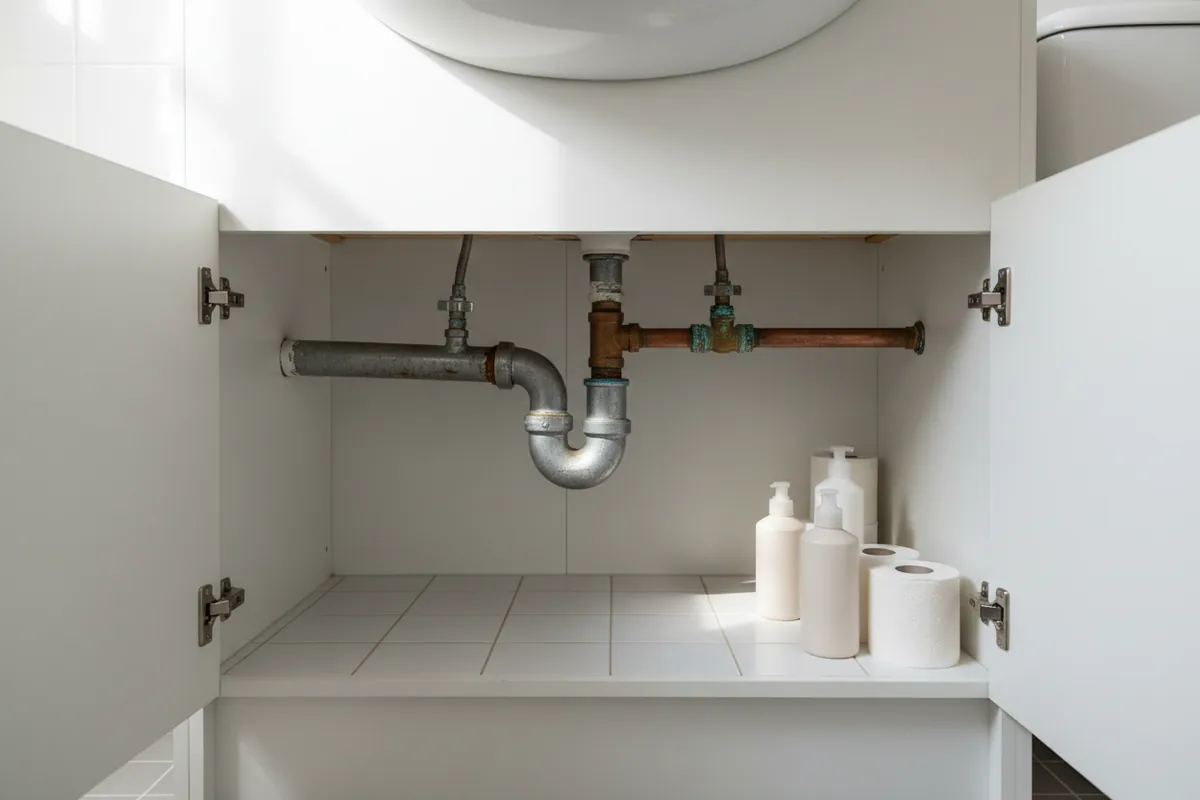
A plumbing code violation is a finding by a city or county that a home's water lines, drains, vents or gas piping do not meet the required plumbing standard, or were installed without a required permit. The notice asks the owner to correct the work or bring it into the permit system. Some owners instead sell the home with the condition disclosed.
On this page
What It Means for Owners
California sets a statewide plumbing standard in the California Plumbing Code, which is Title 24, Part 5 of the California Building Standards Code. The California Building Standards Commission publishes the Building Standards Code. Cities and counties apply that standard through their own building and code enforcement offices. A violation means an inspector has found that installed plumbing, drainage, venting or gas piping falls short of what the code requires.
In plain terms, the code covers how each part of a home's plumbing system is built and connected:
- Water lines that supply fixtures and appliances.
- Drains that carry wastewater away from the home.
- Vents that serve the drain system.
- Gas piping that feeds appliances such as a water heater.
A citation generally points to the part of the system the inspector found out of line with the code, and to the specific code section it fails to meet. The notice itself is the place to find which standard is at issue for a given home.
The type of notice matters, because different notices ask for different things:
- Code enforcement notice or administrative citation. This is a notice from a city or county code enforcement officer, the local official who enforces property rules. It generally names the code section the work fails to meet. It usually sets a deadline to correct the work or a date for a hearing.
- Red tag or stop-work order. A building department posts this notice. It can bar further work, or it can bar use of part of the property until the problem is resolved.
The exact steps, deadlines and penalties come from the local ordinance and the notice itself, so the notice is the document that controls what happens next.
Hearings
When a notice sets a hearing date, the hearing is part of the local enforcement process. The procedures, including how a hearing is requested or held and what follows it, come from the local ordinance and the notice. Depending on that ordinance, penalties or a recorded lien may follow if the violation stays open. A dispute with the agency over a finding is a contested matter that an attorney can address.
Unpermitted work
One point causes the most confusion. Unpermitted work, meaning plumbing that needed a permit and was done without one, is a violation in its own right. That stays true even when the pipes work and look sound. A jurisdiction can cite the missing permit separately from any defect in the work. The building code violations framework explains how local offices enforce these standards more broadly.
Who It Affects
Enforcement generally runs against the owner of record, the person or people shown as owners in the county's recorded title. That is true even when someone else did the work years earlier. A co-owner shares ownership with others on title, a tenant lives in the home without owning it, and a contractor performs the work. The notice is addressed to the owner, not to the tenant or the contractor.
Owners who face a plumbing finding often fall into one of these groups:
- Heirs and successors. A person who inherits or acquires a home generally takes it with any open violations and any liens recorded against it.
- Landlords. California's habitability standards for rental housing include working plumbing. A plumbing defect in a rental can therefore raise both a code issue and a tenant issue. An attorney can explain how the rental rules apply to a particular unit.
- Investors and buyers. Someone who buys a property with open violations takes on the job of correcting them after the sale closes.
A lender or loan servicer may also have a stake in the property. Its loan terms may require that a violation be corrected before it funds or continues a loan. What a particular lender requires depends on its own documents.
Rules, Disclosures and Fine Print
The sale questions start with Civil Code section 1102. That section opens the Civil Code article on what a seller discloses when transferring a home. In the statute's words, the article applies "to any transfer by sale, exchange, real property sales contract as defined in Section 2985, lease with an option to purchase, any other option to purchase, or ground lease coupled with improvements of any single-family residential property," except as section 1102.2 provides. Subdivision (c) adds: "Any waiver of the requirements of this article is void as against public policy." A buyer cannot sign away these disclosure requirements.
Civil Code section 1102.2 lists transfers the article does not cover. The exemptions depend mostly on the kind of transfer and on who the buyer is. They include:
- sales or transfers under a court order, including sales ordered by a probate court in the administration of an estate;
- foreclosure-related transfers;
- certain sales by fiduciaries such as trustees;
- "Sales or transfers from one coowner to one or more other coowners";
- transfers to a spouse, or to a person "in the line of consanguinity" of a transferor;
- transfers "to or from any governmental entity."
The list continues beyond these items. The disclosure duties are therefore not the same for every buyer. They do not change, however, because a buyer pays cash or agrees to take the home as it is.
A recorded code enforcement lien is a separate matter. A lien is a claim recorded against the property, and it is a title issue that a title search can turn up. The disclosure rules and a lien are two different obligations, and settling one does not resolve the other. More on sale paths appears in selling a property with code violations.
Options and Trade-offs
Each path carries its own cost, risk and time burden.
Correct the violation and close the permit. A plumbing contractor typically assesses the work, applies for a permit and makes the repairs. The work then passes inspection and receives final sign-off. This path ends the violation at the source, though it takes money and patience up front. The cost to fix code violations depends on fines, permit and plan fees, the repair work and any lien.
Legalize unpermitted work. An after-the-fact permit brings existing work into the permit system. Because the work is already built, concealed piping often has to be exposed so an inspector can see it. That can mean opening walls or floors. Approval is not assured, and work that fails inspection may have to be redone.
Sell the home in its present condition. The owner sells without correcting the violation first, and the condition is disclosed. A buyer who takes the property as it is accepts its condition. The disclosure rules described above still apply unless a section 1102.2 exemption fits the transfer.
Sell directly to a buyer paying cash. A direct offer of this kind is often lower than what the open market might bring, because the buyer absorbs the corrections, the uncertainty and the cost of reselling. In return, the seller does less preparation, has fewer showings and is less exposed to a buyer's loan falling through.
Owners can also combine paths, such as correcting the urgent gas issue and selling with the rest disclosed. Written offers and estimated net proceeds help show which path fits. Net proceeds are what the seller keeps after commissions, repairs, carrying costs, loan payoffs and closing costs come out of the price.
A disagreement with a co-owner, a lender or the agency itself is a contested matter, and an attorney handles it.
Mistakes to Avoid
Silence after a notice does not close the case. The violation stays open. Depending on the local ordinance, penalties, a hearing or a recorded lien may follow.
Other errors come up often:
- Repairing without a required permit. A quiet fix done without a permit can create a second violation on top of the first.
- Treating a cash or as-is sale as an exit from disclosure. See the disclosure section above.
- Mixing up an inspection report and an enforcement action. A home inspector documents conditions for a buyer's information. A code enforcement officer issues a notice that carries legal consequences.
- Assuming the violation stayed with the seller. An open violation generally follows the property to whoever is the current owner of record.
What to Do Next
The notice or citation is the starting document. It names the code section at issue, the correction required and any deadline or hearing date. The local building department's permit records show whether past plumbing work was permitted and inspected, and owners can generally request copies of those records.
Before any application is filed, a plumbing contractor can assess what correction or legalization would involve. For income-tax questions about repair costs or a sale, a CPA, an enrolled agent or a tax attorney reviews the question. For a title question, a hearing or a dispute, an attorney does. Broader code violation help covers notices, citations and red tags across Southern California.
Setting the notice beside the permit history for the address is often a useful first step. Read together, the two show which items are defects in the work, which are missing permits, and which dates control the timeline.
Ready to talk through your options?
Share the details of your notice. You choose whether contractors or a sale consultant may contact you.
Get help with my propertyFrequently asked questions
Do home inspectors report code violations?
A home inspector documents conditions and deficiencies for a buyer's information, and the report may note items that look out of code. The report is not an enforcement action and carries no legal penalties. A code enforcement officer's notice is a separate process that does carry legal consequences.
Is plumbing a landlord's responsibility in California?
California's habitability standards for rental housing include working plumbing, so plumbing in a rental is closely tied to the owner of record's duties. How those standards apply to a specific unit and tenancy is a question an attorney can answer.
Does a plumbing code violation have to be fixed before selling a home?
A home can be sold in its present condition. The Civil Code disclosure rules still apply to most sales, as described in the disclosure section above. A waiver of those rules is void, and the exemptions depend on the kind of transfer and the buyer, not on whether the violation was corrected first.
What happens if I ignore a plumbing code enforcement notice?
The violation stays open. Depending on the local ordinance, the jurisdiction may assess penalties, schedule a hearing or record a lien against the property. A recorded lien and an open violation follow the property to a new owner.
What is unpermitted plumbing work?
It is plumbing work that needed a permit but was done without one. It counts as a violation even when the work itself is sound. Legalizing it typically means an after-the-fact permit application and an inspection, often after concealed work is exposed.