A notice like this is often taped to a door or mailed to the owner of record, and it may refer to a local ordinance that is hard to read. It could concern a home the owner lives in, a rental, or an inherited house with a backyard pool no one has used in years. This guide explains what the notice means, who is responsible for correcting it, the state and local rules behind it, and how correcting, permitting and selling compare.
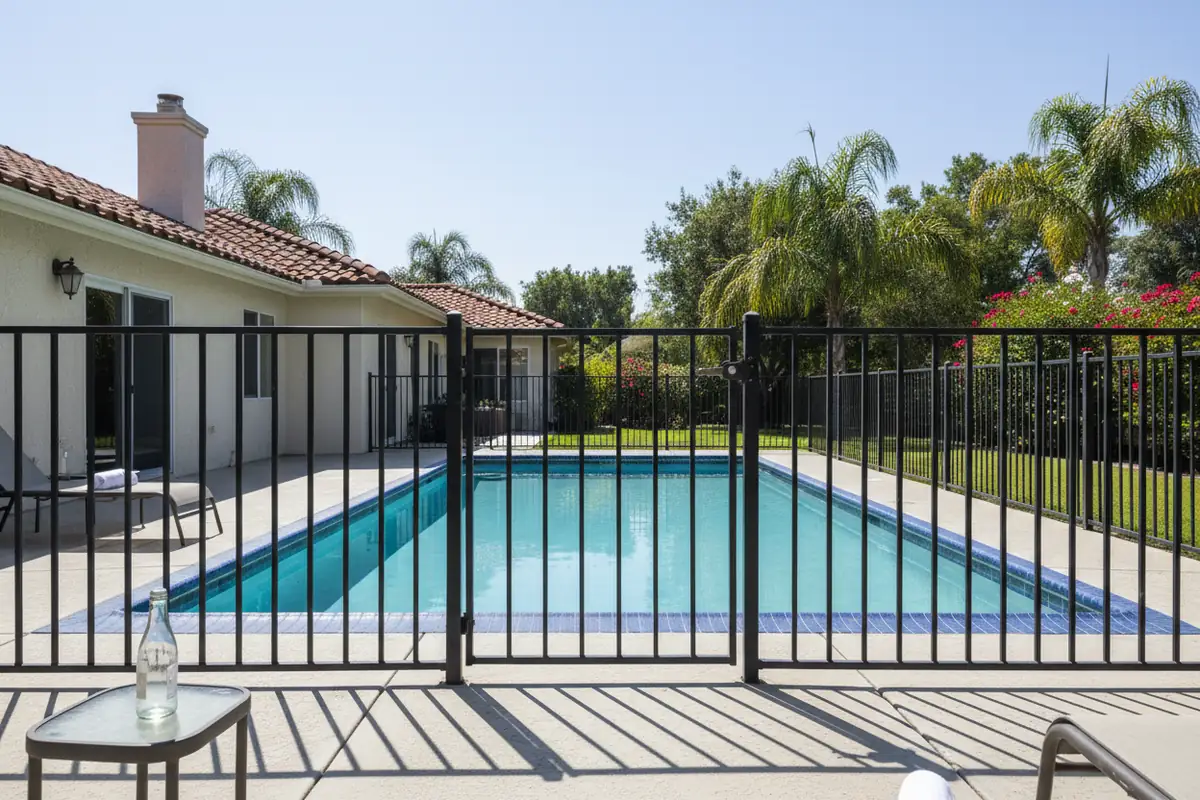
A pool safety code violation is a written finding by a city or county that a pool or spa on a California property is missing a required safety feature, such as a proper barrier, gate or drain cover. The notice names the problem and what must be fixed. Owners can correct it, work through permits, or sell with full disclosure.
On this page
What It Means for Owners
A pool or spa safety code violation is a formal finding that the pool or spa does not meet the physical safety requirements the law sets. It usually comes from a code enforcement officer, the local employee who investigates and cites property conditions, or from a building official, the person who runs the local building department and oversees permits and inspections.
The notice names the specific deficiency. Common examples include a missing or broken barrier, a gate that does not close and latch on its own, an uncovered or noncompliant drain, or a gap in an enclosure. It also says what the owner has to do to correct it, and usually by when.
Violations come to light in several ways, including:
- A complaint. A neighbor, tenant or passerby reports an open gate or a broken fence.
- A permit inspection. An inspector looking at other work notices the pool area.
- A sale. A buyer's inspection or a permit application tied to a sale turns up the issue.
- An enforcement sweep. A city reviews properties in an area.
The duty to correct falls on the owner of record, the person or entity whose name is on the recorded title. It does not matter who built the pool or how long ago. The correction deadline and the next enforcement steps vary by city and county, and the notice itself states them.
The statewide framework is California's Swimming Pool Safety Act. Health and Safety Code section 115920 gives the law its name: "This act shall be known and may be cited as the Swimming Pool Safety Act." The Act deals with drowning-prevention features for residential pools and spas, and cities and counties may add their own requirements on top of it.
Who It Affects
Pool and spa safety rules reach any California owner of residential property with a pool or spa. That includes single-family homes, multi-family buildings with a shared pool, and single-unit or multi-unit rentals.
Ownership is the trigger. An owner who bought a house with an existing pool, or who inherited one, holds the compliance duty from the time title passes. Heirs and estate representatives sometimes assume a problem belongs to whoever installed the pool, but code compliance runs with the property. An open violation stays attached to the parcel after a death or a sale.
Pool areas tend to be checked at predictable moments rather than on a fixed schedule:
- when a buyer's inspector reviews the property before a sale,
- when a permit is pulled for a remodel, an addition or other work on the lot,
- when a neighbor or tenant files a complaint, or
- when a local enforcement program reviews properties in a neighborhood.
For landlords, there is an added practical concern. A tenant, a tenant's child or a guest is often the person nearest an unlatched gate or an exposed drain. Questions about liability if someone is hurt belong to an attorney; this page covers the code side of the problem. The same notice that applies to an owner-occupied home applies to a rental, and the landlord, as owner of record, is the one who receives it. For parcels with more than one kind of open issue, the overview of building code violations explains how local offices enforce building and housing codes.
Rules, Disclosures and Fine Print
Two layers of rules apply to a pool or spa citation in California: the physical safety rules, and the disclosure rules that apply if the property is sold.
Barrier and gate rules. The Swimming Pool Safety Act, Health and Safety Code section 115920 and the sections that follow it, sets the state's framework for drowning-prevention features at homes with pools and spas. In plain terms, barrier and gate rules are meant to keep young children from reaching the water without an adult. The specific features a given pool needs, including any fence heights, latch positions or gap limits, are set out in the code text and local ordinance the notice cites. The citation line on the notice is the key detail, because it shows which rule the officer applied.
Drain and entrapment rules. Drain covers and anti-entrapment devices are addressed in state law and in a federal law, the Virginia Graeme Baker Pool and Spa Safety Act. Which rule applies to a particular residential pool or spa depends on the pool, its equipment and the local code, so the notice and the building department are the sources for a specific property.
Local rules. Cities and counties can adopt requirements stricter than the state minimum. A notice from one city may cite a section a neighboring city does not have. The cited ordinance is the rule the owner is measured against.
Seller disclosure. If the property is sold, Civil Code section 1102 brings in California's seller disclosure article. Except as Civil Code section 1102.2 provides, the article "applies to any transfer by sale, exchange, real property sales contract as defined in Section 2985, lease with an option to purchase, any other option to purchase, or ground lease coupled with improvements of any single-family residential property." Civil Code section 1102(c) adds that "Any waiver of the requirements of this article is void as against public policy." A buyer paying cash, or agreeing to take the property as it is, does not change those duties.
Disclosure exemptions. Whether the article applies depends on the buyer and the kind of transfer. Civil Code section 1102.2 lists transfers the article does not cover, including "Sales or transfers from one coowner to one or more other coowners," sales or transfers to a spouse or to a person "in the line of consanguinity" of one or more of the transferors, and sales or transfers to or from any governmental entity. The list also includes other categories, such as certain court-ordered and foreclosure transfers; the full text is in the section itself. Whether an exemption fits a particular sale is a question for a real estate attorney.
Options and Trade-offs
Correction, permitting and sale are separate paths, and each asks something different of the owner.
Correcting the violation. The owner hires a contractor to install or repair the barrier, gate hardware, drain cover or other feature the notice names, then requests a re-inspection from the enforcing office. This is the most direct way to close the violation. The trade-off is the up-front cost and the time it takes to schedule the work. The parts of that cost, from fines and plan fees to the repair itself, are laid out in what it costs to fix code violations.
Permitting and legalization. If the pool or spa was built without permits, or the correction itself needs a permit, the owner applies through the local building department. This is a different track from replacing a latch or a drain cover. It may involve plans, fees and inspections of work that was never reviewed, and the building department decides what it will accept. Approval is not assured.
Selling in present condition. A property with an open pool safety violation can be sold as it is. The disclosure rules above still apply, and the violation does not disappear at closing: the buyer takes it on, and usually reflects that risk in the price.
A direct or cash sale. Some owners consider selling directly to a buyer who pays cash and accepts the property as it is. Such an offer is often lower than an open-market price, because that buyer absorbs the correction work, the enforcement risk and the cost of reselling. In exchange, the seller has less preparation, fewer showings and no dependence on a buyer's loan approval. The open violation remains either way. A fuller look at sale paths is in selling a property with code violations.
Comparing written offers and estimated net proceeds is how owners usually tell which path fits. Net proceeds means the price less commissions, repairs, carrying costs, loan payoffs and closing costs. Where co-owners disagree, or a contractor, lender or agency is in a dispute with the owner, the matter becomes contested, and that is a separate subject handled by an attorney.
Mistakes to Avoid
Setting the notice aside. A violation left uncorrected past the notice's deadline can lead to further enforcement. Depending on the local ordinance, that may include more citations, administrative fines or a lien recorded against the property. The notice states the specific consequences for that city or county.
Fixing without a required permit. Some barrier or drain corrections need a building permit. Work done without one can add an unpermitted-work problem to the original citation. The building department can say whether a particular correction needs a permit before work starts.
Assuming the file closes on its own. Finishing the repair does not end the case by itself. The enforcing office generally needs to re-inspect and record the violation as closed. The notice or the code enforcement office describes the procedure, and written confirmation of closure is a useful record to keep with the property file.
Leaving the pool off the disclosures. A seller who knows about a pool safety deficiency and omits it can face liability under the disclosure article. Because the exemptions are narrow, a sale that falls outside them carries the full duty.
Treating it as a cosmetic item. A pool barrier or drain citation concerns drowning and entrapment risk, not appearance. Enforcing offices may give it more attention than a paint or landscaping complaint, which can affect how closely they follow up.
What to Do Next
The notice or citation is the starting document. It names the code section or ordinance violated, the correction required, the deadline and how re-inspection works. Reading the cited section alongside the notice often shows whether the problem is a hardware fix or a larger permit question.
The local building department or code enforcement office can confirm whether the correction needs a permit and what re-inspection involves. Rules and procedures differ by city, as the local pages for San Diego code violations and other San Diego County cities show. For owners weighing whether to correct and hold, correct and sell, or sell in present condition, a contractor can describe the work, an appraiser can speak to value, and a real estate agent can explain market and disclosure practice. Each supplies one piece of the net-proceeds picture.
A common first step is locating the notice, noting the ordinance it cites and the deadline it states, and asking the issuing office whether the listed correction requires a permit.
Ready to talk through your options?
Share the details of your notice. You choose whether contractors or a sale consultant may contact you.
Get help with my propertyFrequently asked questions
What do pool inspectors look for in California?
Inspectors check whether the pool or spa has the safety features the Swimming Pool Safety Act and the local ordinance require, such as barriers, gates with their latching hardware, and drain covers. The exact checklist depends on the pool and the applicable ordinance, and the notice or the local building department names the items for a given property.
What happens if a pool safety violation is not corrected?
Depending on the local ordinance, an uncorrected violation can lead to more citations, administrative fines or a lien recorded against the property. The notice sets out the deadline and the specific steps for that city or county.
Does a pool safety violation have to be disclosed when selling a home in California?
For a covered transfer of single-family residential property, yes. Civil Code section 1102 brings in the seller disclosure article, and a waiver is void. Paying cash or buying as-is does not change those duties, but Civil Code section 1102.2 exempts certain transfers, described in the rules section above.
Can a property be sold with an open pool safety violation in California?
Yes. The sale does not close the violation, and disclosure duties still apply. The buyer inherits the correction work, which is why such sales are often priced lower.
Do pool safety requirements apply to above-ground pools in California?
That depends on how the applicable code and local ordinance define a pool or spa. The notice identifies the section the officer applied, and the local building department can say how its rules treat a particular above-ground pool.
Does a landlord have to fix a pool safety violation before renting the property?
A landlord who receives a pool safety notice is the owner of record responsible for correcting it on the terms the notice states. Liability questions if a tenant or guest is hurt are a separate legal matter for an attorney.
What is the California Swimming Pool Safety Act?
It is the statewide law on drowning-prevention safety features for residential pools and spas, named in Health and Safety Code section 115920. Cities and counties may add their own requirements on top of it.