An owner in this situation has a structure in the backyard and a question hanging over it. A code enforcement notice may have named it. A buyer's inspector may have flagged it, or a search of old records may have turned up no permit at all. This guide explains what the missing permit means, who carries it, and how each of the three paths compares.
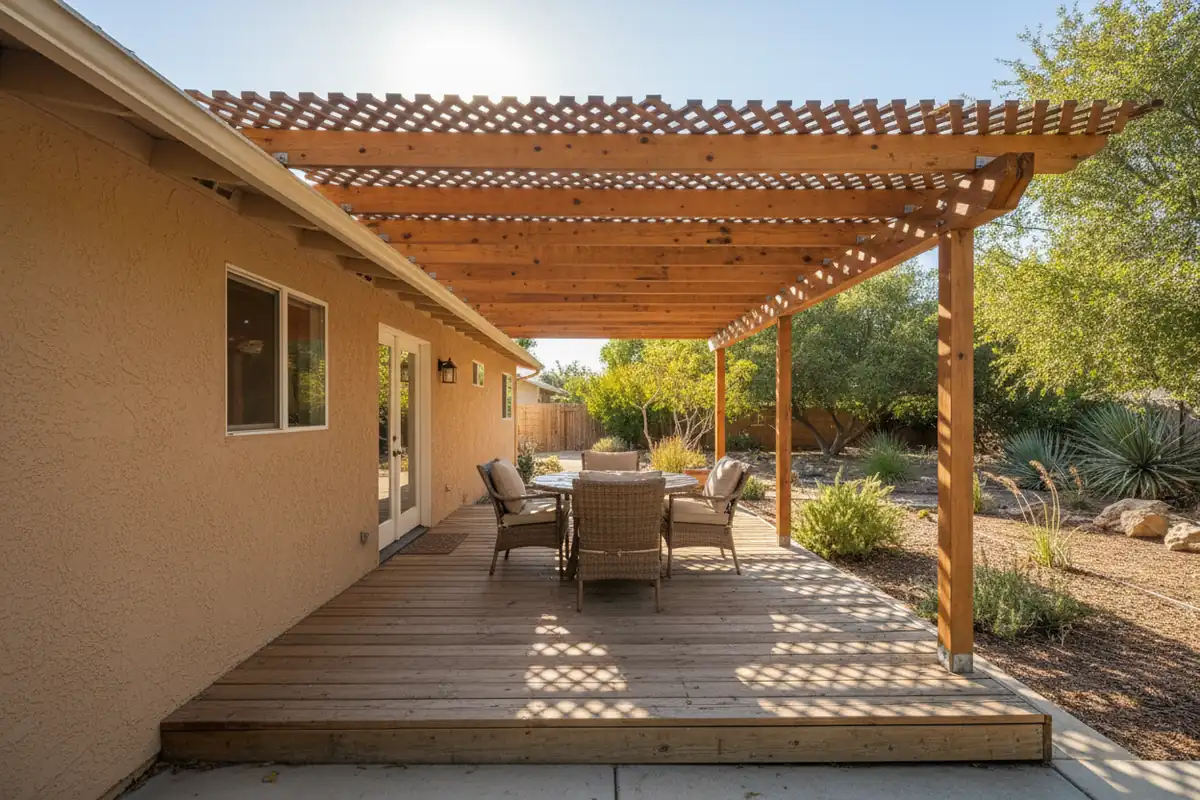
An unpermitted patio cover or deck is one built without the building permit the city or county required when it went up. In California, an owner can generally seek a permit after the fact, remove the structure, or sell the property in its present condition. A sale of a single-family home still carries California's seller disclosure rules, subject to listed exemptions.
On this page
What It Means for Owners
"Unpermitted" means the structure was built without the permit the local jurisdiction required at the time of construction. California cities and counties issue building permits under the statewide California Building Standards Code, found in Title 24 of the California Code of Regulations, along with their own local ordinances. Each local building department sets its own permit thresholds. Attached patio covers, many freestanding ones, and decks above a certain height or size generally need a permit. The exact line depends on the city or county.
A structure built without a permit was never inspected. No one with authority checked its framing, footings, fire separation, electrical work or zoning setbacks. That gap is why the missing permit matters.
For the owner of record, the person who holds title to the property, the practical consequences can include:
- a citation or a notice to correct,
- a stop-work order or a red tag,
- disclosure questions in a sale,
- questions from a homeowner's insurer,
- added scrutiny from a buyer's lender.
The insurance point deserves a closer look. An uninspected structure is one whose construction no official has reviewed, and an insurer asking questions about it is asking about that same gap. How a particular policy treats an unpermitted patio cover or deck depends on the policy's own terms, which the insurer or the policy documents can clarify.
Patio covers and decks also tend to raise questions outside the building department. In a community governed by a homeowners association, the association's own rules may address backyard structures separately from the city or county. A city permit and association approval are different things, and the governing documents for the community are where any association requirement would appear.
How a missing permit fits among other building code violations depends on what the local office finds.
Who It Affects
A code violation attaches to the property, not to the person who built the structure. A new owner, a buyer or an heir takes the property subject to any violation that is still open.
That creates two quite different starting points. An owner who built the patio cover may know what was done and when. An owner who bought or inherited the property with the structure already in place often has no plans, no contractor name and no record of the work. The obligation is the same for both, but the paperwork available to each is not.
Heirs and estate representatives find that the violation does not end at death. The estate or the successor owner inherits the need to correct the structure or deal with it in a sale.
Investors and buyers who discover an unpermitted structure during escrow or after closing take it on as their own concern, unless the purchase contract addresses it.
Landlords face one more layer. Depending on the jurisdiction, an unpermitted structure on a rental can affect habitability findings or a rental permit. The local building department is the authoritative source for any of these local rules, which vary from place to place.
Rules, Disclosures and Fine Print
California's seller disclosure article begins at Civil Code section 1102. Under subdivision (a), it applies "except as provided in Section 1102.2" to any transfer of single-family residential property by "sale, exchange, real property sales contract as defined in Section 2985, lease with an option to purchase, any other option to purchase, or ground lease coupled with improvements."
Subdivision (c) adds a rule that matters for as-is sales: "Any waiver of the requirements of this article is void as against public policy." The disclosure duties do not change because a buyer pays cash or agrees to take the property as it is. "As-is" describes the condition a buyer accepts. It does not waive the seller's duties.
Civil Code section 1102.2 lists transfers the article does not cover. Some of these exemptions turn on who receives the property, including:
- "Sales or transfers from one coowner to one or more other coowners"
- transfers to a spouse
- transfers to a person "in the line of consanguinity" of a transferor, meaning a blood relative in the direct line
- transfers to or from any governmental entity
Others turn on the kind of transfer, including court-ordered sales and foreclosure sales.
Sales by a fiduciary administering a trust or a decedent's estate are also exempt. That exemption does not apply where the trustee is a natural person who is trustee of a revocable trust and is a former owner of the property, or was an occupant in possession of it within the preceding year.
Separately, some local building departments require open problems to be corrected before they issue a permit for other work on the property. An attorney can say what a particular sale must disclose about a particular structure.
Options and Trade-offs
Permit after the fact. The owner applies to the local building department, submits plans and pays the fees the department sets. The structure is then inspected. If it meets current code, it may be approved. If it does not, corrections or removal of the noncompliant parts may be required first. Approval is not assured. Fees and processing time are not uniform across California; each department publishes its own fee schedule and sets its own review sequence, so the cost and the length of the process for a given structure come from that office. The general process for unpermitted construction options works the same way for larger additions.
Removal. The owner takes the structure down, with a demolition permit where the jurisdiction requires one. Removal can resolve the violation, but the improvement is gone.
Sale in present condition. The disclosure duties under Civil Code section 1102 still apply, subject to the exemptions described above. A buyer who accepts the property takes on the correction.
A sale on the open market through a real estate agent and a direct sale to a buyer who pays cash and takes the property as it is lead to different results. A direct offer is often lower than an open-market price, because that buyer absorbs the repairs, the risk and the cost of reselling. The seller gets less preparation, fewer showings and less reliance on a buyer's loan in return.
Comparing written offers and estimated net proceeds is how an owner tells which path fits. Net proceeds are the price less commissions, repairs, carrying costs, loan payoffs and closing costs.
Mistakes to Avoid
Setting a notice aside. A code enforcement notice typically sets a deadline for correction or a response. Ignoring it can lead to escalating fines or a lien on the property, under whatever terms the local ordinance sets.
Counting on it staying hidden. Home inspections, permit record checks and lender appraisals commonly bring unpermitted structures to light. A seller who does not disclose a known unpermitted structure risks liability after closing.
Treating a cash or as-is sale as a way around disclosure. As covered above, a buyer's agreement does not erase the duty; only the listed exemptions take a transfer outside the article.
Placing the problem on the builder. The violation follows the property, whoever put the structure up.
Pulling a new permit first. Some jurisdictions will not issue permits for new work while a violation stays open, so a kitchen remodel can stall over a backyard deck.
A structure that has reached the point of a posted unsafe notice raises different questions, covered under red-tagged houses.
What to Do Next
The local building department's permit records are the usual starting point. An owner can request a permit history for the property address to see whether a permit was ever issued for the structure. Sometimes the record shows a permit that was opened and never finaled. Sometimes it shows nothing.
Where a code enforcement notice has arrived, the notice itself names the violation, the correction required and the response deadline. Its exact wording shapes every later step.
A contractor or an architect who works in that jurisdiction can assess whether the structure as built is likely to meet current code before an application is filed. For a sale, a real estate attorney can explain the disclosure duties for that specific transaction. Similar questions come up in unpermitted ADU legalization, though those projects are usually larger.
For most owners, then, the two documents that matter first are the permit history for the address and any notice the city or county has sent. With both in hand, whether a permit was required, and what correction is being asked for, becomes something the building department can answer directly.
Ready to talk through your options?
Share the details of your notice. You choose whether contractors or a sale consultant may contact you.
Get help with my propertyFrequently asked questions
Is a permit required for a patio cover in California?
Often, yes. The threshold depends on size, height, attachment, and any electrical or plumbing work, and the local city or county building department sets it. In a community with a homeowners association, the association's rules are a separate layer from the city or county permit.
Do I need building permits for a patio cover or deck?
Structures attached to the house, decks above a certain height or size, and work that includes electrical or plumbing typically require a permit. A low, freestanding patio cover may be exempt in some jurisdictions. The local building department decides whether a permit was required for a particular structure.
What happens if a deck or patio cover was built without a permit?
The structure is treated as unpermitted, and because it was never inspected, no official has checked its framing, footings or setbacks. The owner may receive a notice requiring correction, and a homeowner's insurer or a buyer's lender may raise questions about it.
Can I get a permit after the fact for an unpermitted patio cover?
Many California jurisdictions accept after-the-fact applications. Where the original builder left no plans, the owner may need new plans drawn for the structure as it stands, which a contractor or architect familiar with the jurisdiction can prepare. Fees and timing come from the local department, and issuance is not assured.
Does an unpermitted patio cover have to be disclosed when selling a house?
The seller disclosure article at Civil Code section 1102 applies to sales of single-family residential property, and a buyer's waiver is void. Transfers exempted by Civil Code section 1102.2, such as those between co-owners or to a spouse, fall outside the article. An attorney can address a specific sale.
What are the building code requirements for patio covers and carports in California?
Cities and counties apply the California Building Standards Code in Title 24 together with their own local ordinances. Requirements typically address structural loads, setbacks, height and fire separation, plus electrical and plumbing work where present. The specific requirements come from the local building department.
Can I sell a house with an unpermitted patio cover or deck?
Yes. A cash buyer taking the property as it is often offers less, since that buyer carries the repair and resale risk, and in return the seller has less preparation and fewer showings. Net proceeds count commissions, repairs, carrying costs, loan payoffs and closing costs, not just the price.
Does a code violation for an unpermitted structure follow the property when it is sold?
Yes. A buyer, heir or other new owner takes the property subject to any open violation. A buyer who learns of it during escrow can address it in the purchase contract; otherwise it becomes that buyer's own concern after closing.